




Uffington Gorse
In December 2022, with the generous support of Trust members & grants, the WBCT purchased a 987 year lease on land to the north-east of Uffington. Marked on maps as Uffington Gorse, but known locally as Fox Covert. The area comprises over 9 acres of mixed-tree, amenity woodland and, as its western boundary, 200 metres of the historic line of the Wilts & Berks Canal. It is owned by the Woodland Trust but since 2012 has been leased by several people. The wood is located 850 metres north-east of the village of Uffington, on the Baulking road, and lies at the very eastern end of the West Vale Branch’s area.
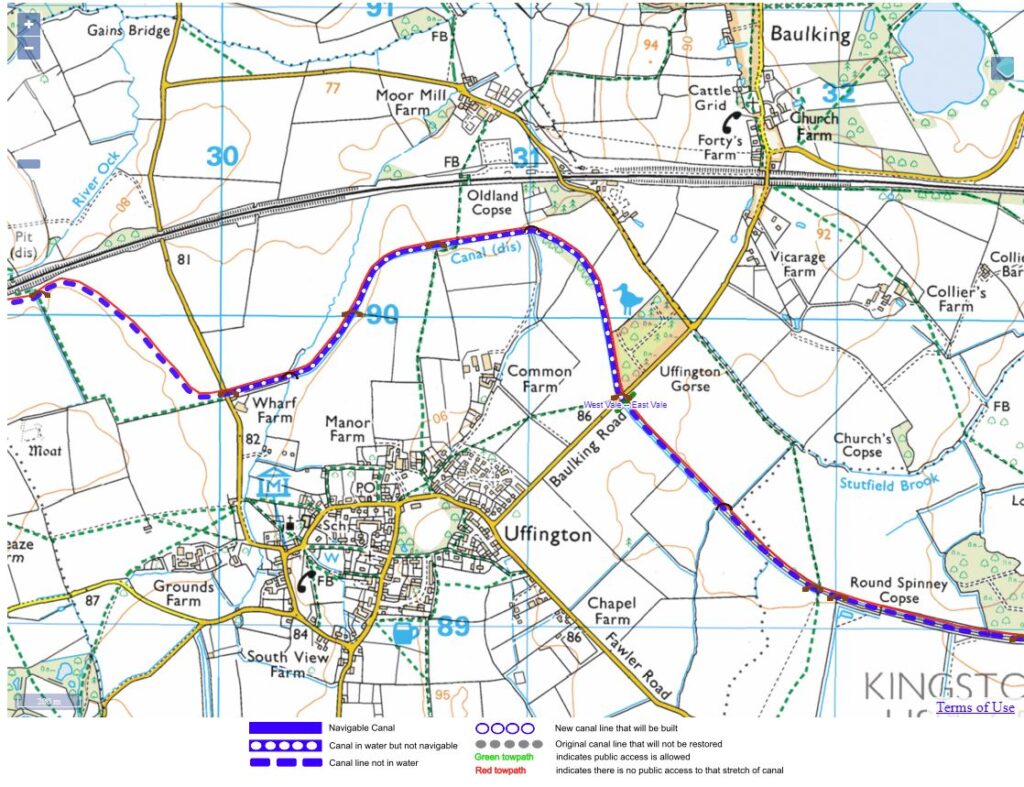
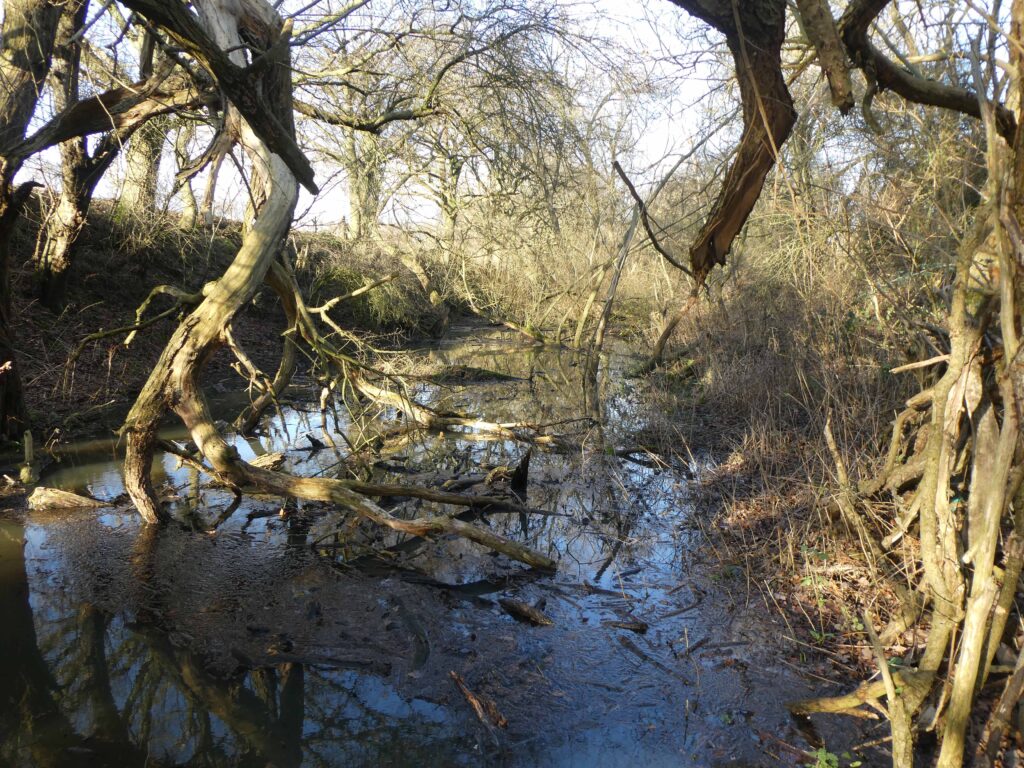
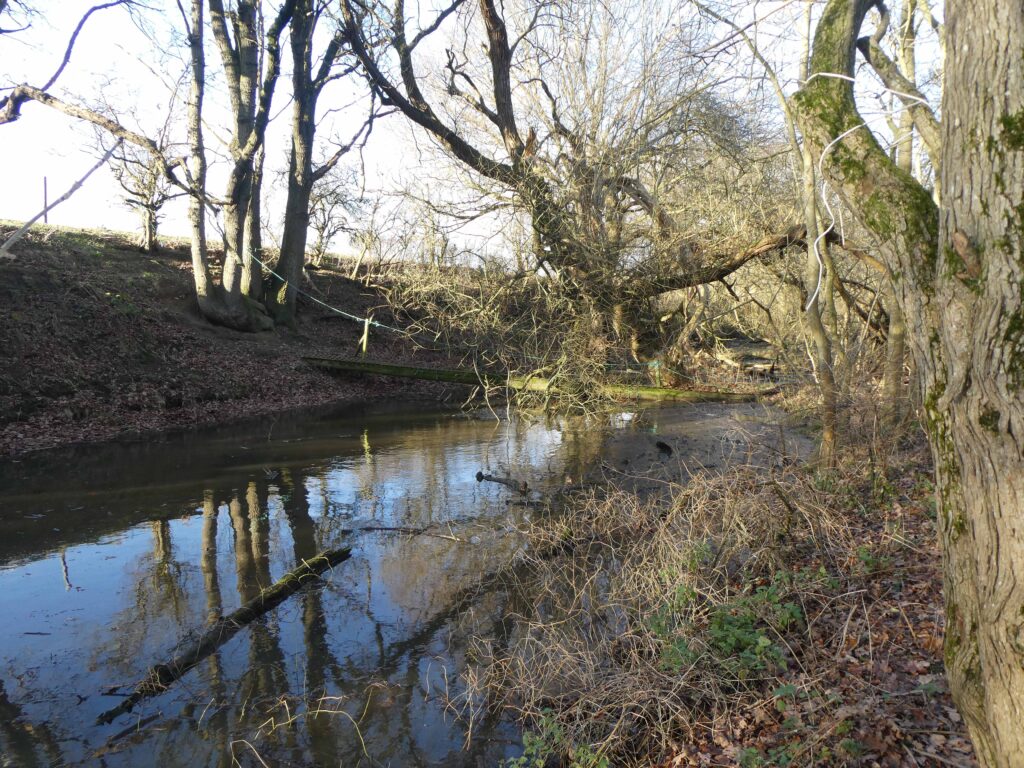
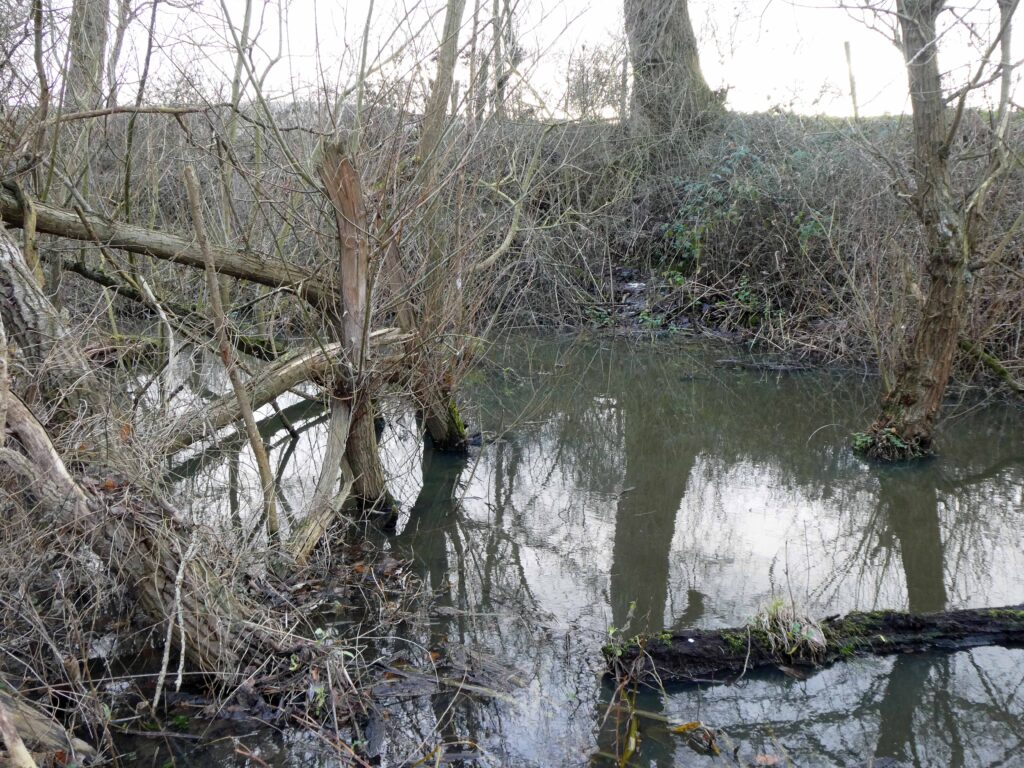
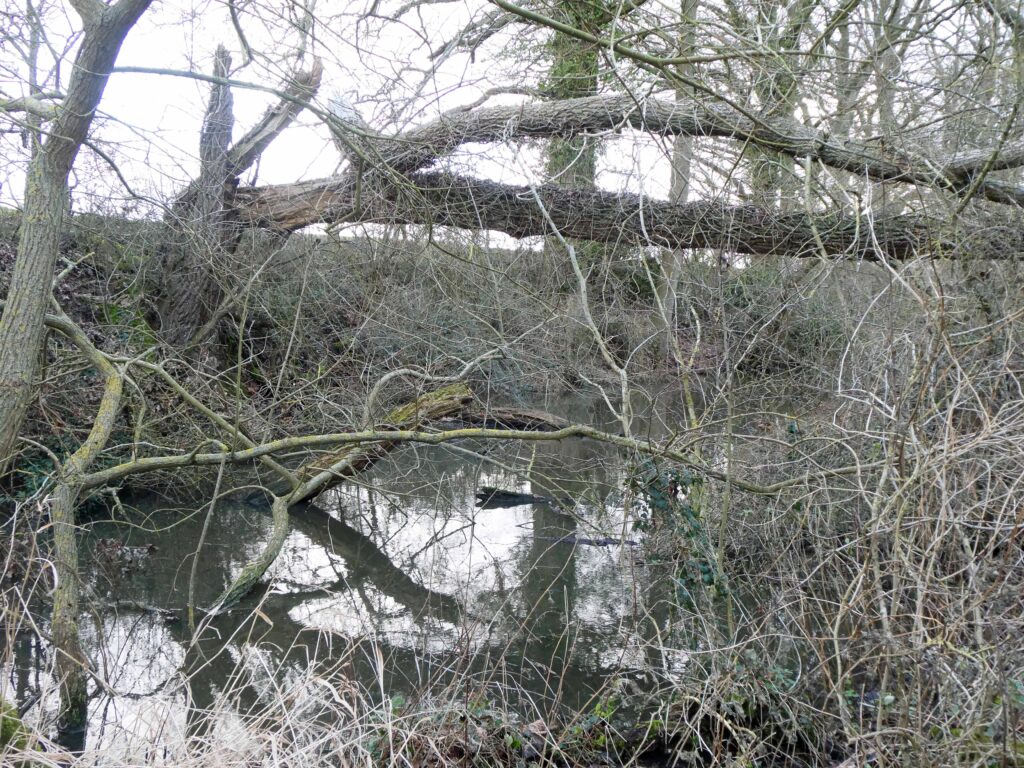
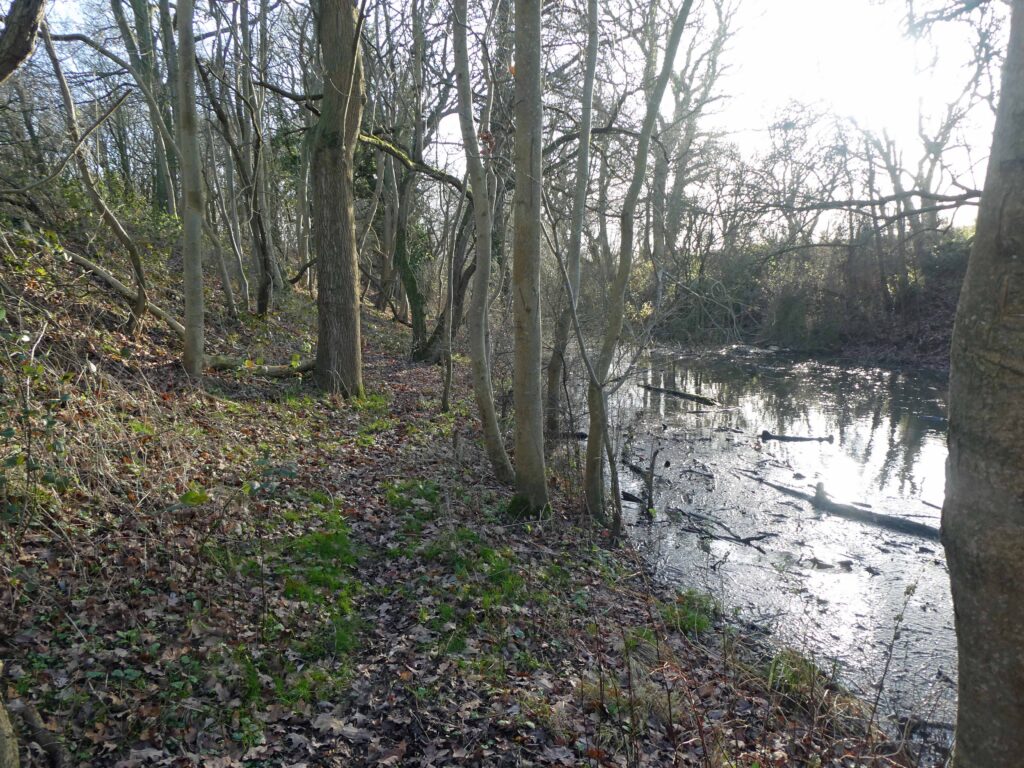
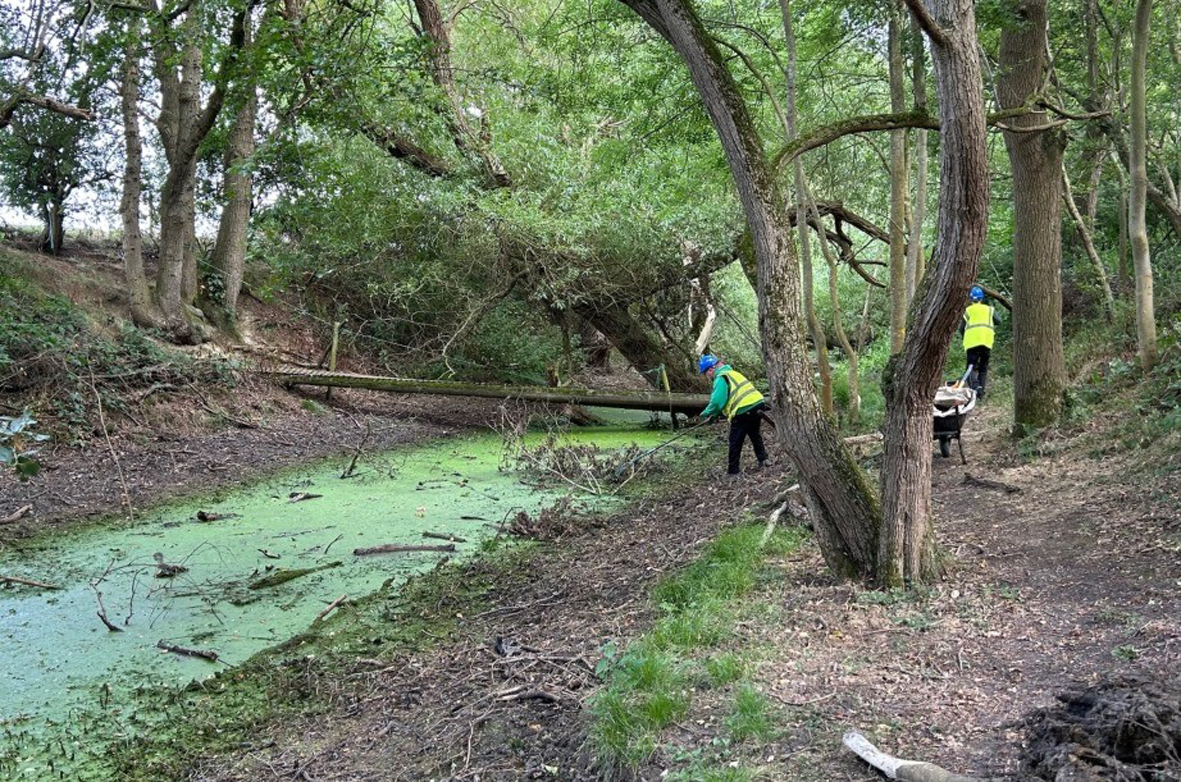
There are several paths in the wood, which is open to the public, it is a peaceful site. The canal itself is in a very deep cutting, made even deeper by the spoil that was piled on the eastern bank during its construction in the 1810’s. The canal was full of debris, especially at the southern end where it had been infilled with waste materials and was very overgrown with lots of fallen trees, the odd telegraph pole and many car tyres. The towpath was hardly visible and impassable. The bank is home to some very large trees that may date from soon after the canal construction.
Old maps indicate the the site had trees at least 150 years ago but we believe that it was mainly planted in the 1920s with oak and pine and included a ‘fox covert’, built by a local fox hunt. Prior to the Woodland Trust aquiring the site in 1985 it had been mostly clear-felled, so the Woodland Trust replanted with native species. Today there are birch, beech, oak, holly, hazel, ash and pine plus some ground cover of honeysuckle, bramble and ferns.
The lease places some restrictions on what we can and cannot do and there is a Tree Preservation Order (TPO) on some of the trees on the canal bank.
The Branch is working with the freehold owners, The Woodland Trust, the local councils and ecologists to ensure the woodland is sympathetically managed, the biodiversity of the site is safeguarded and the canal restored.
Use what3words to find one of the three entrances to the woodland where there is just enough room to park a car off the road at this point. ///intruded.tables.wealth
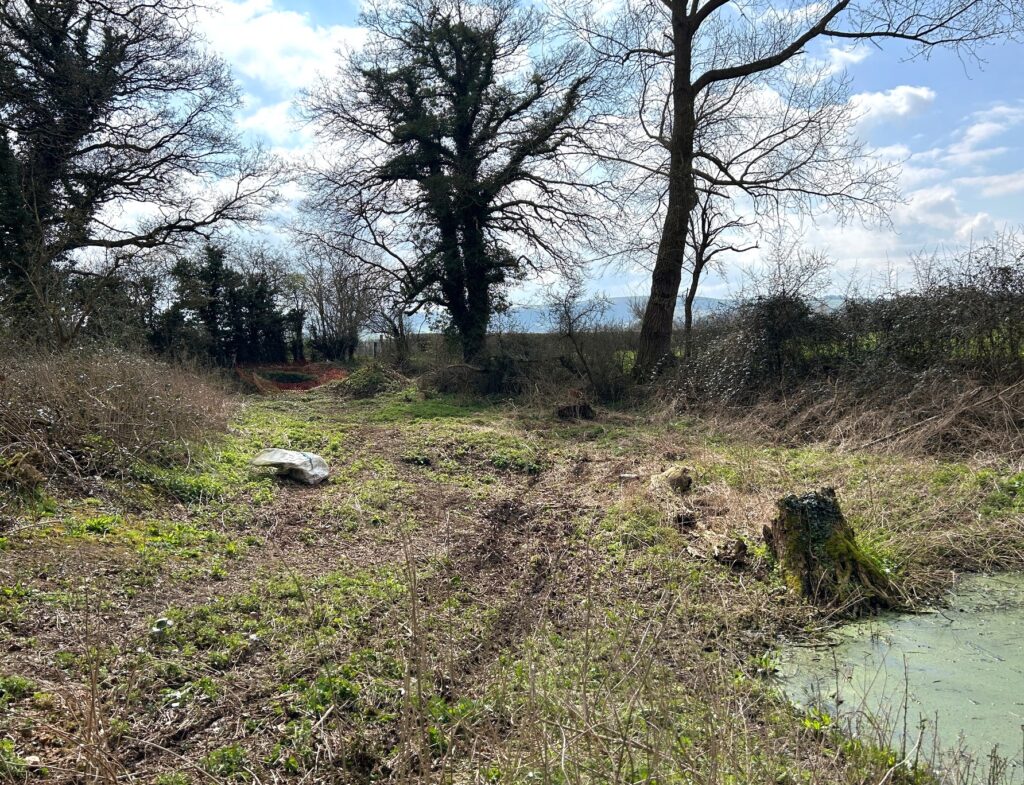
The wood and canal as purchased – January 2023
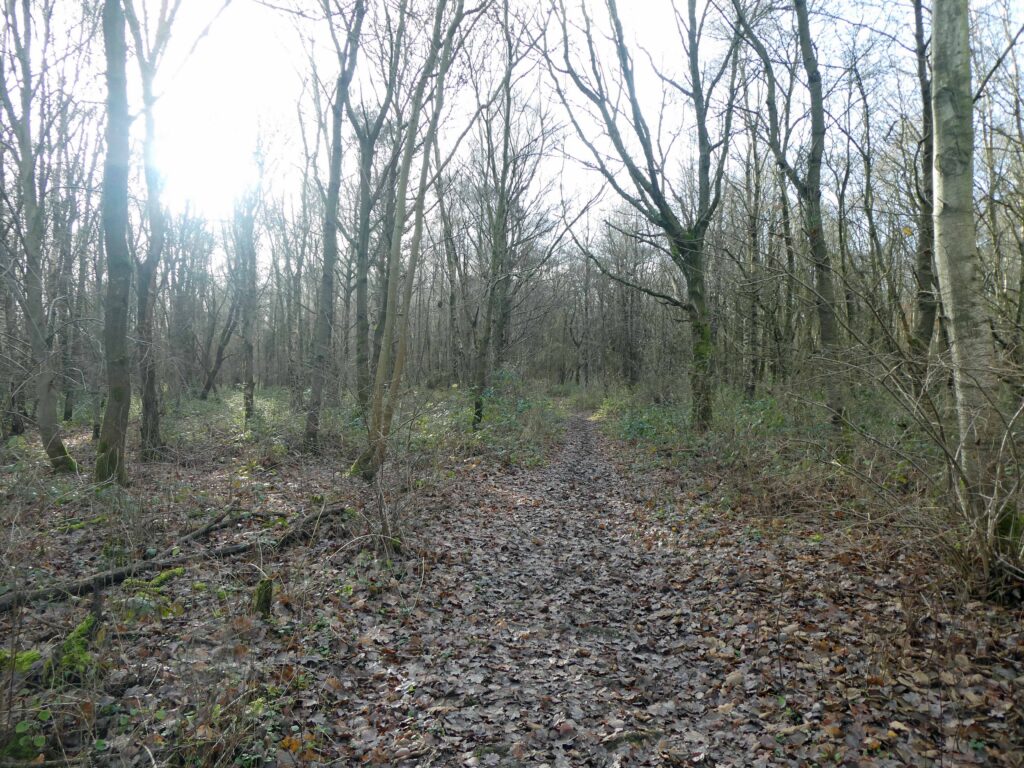
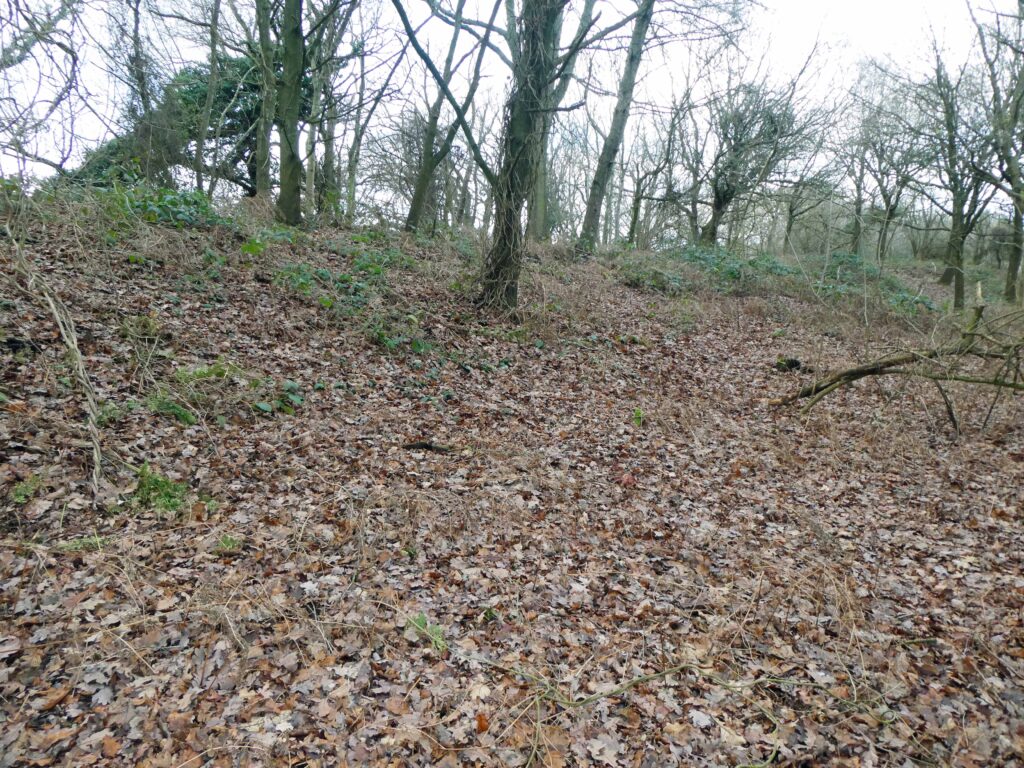
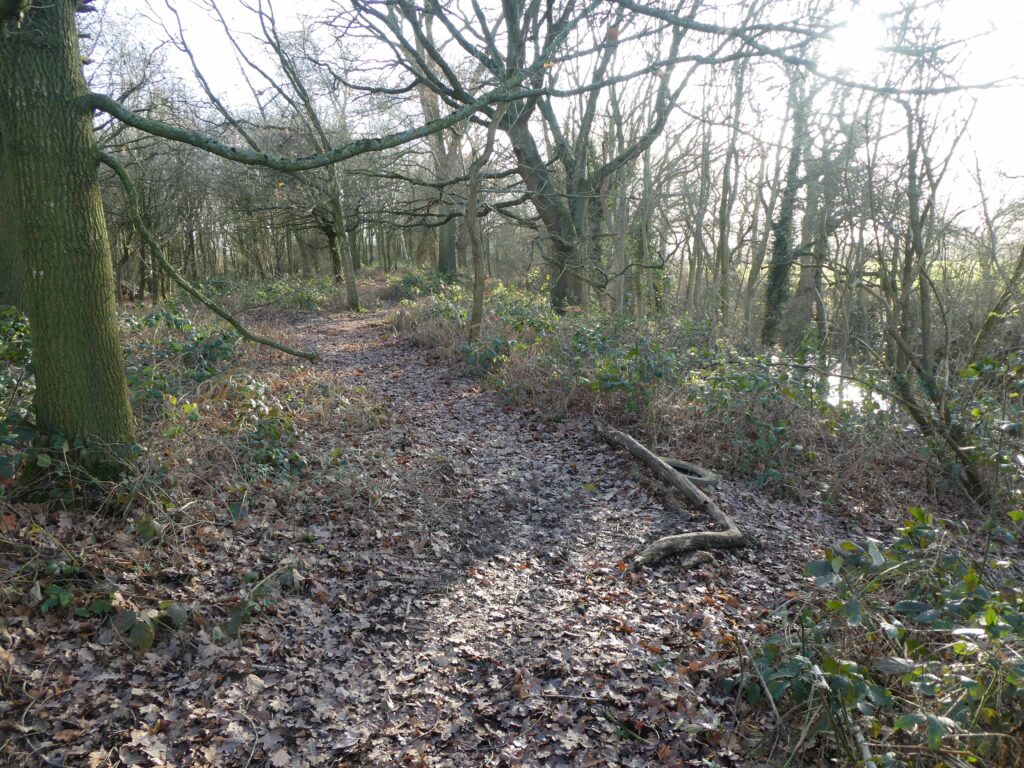
Site Activity During 2025
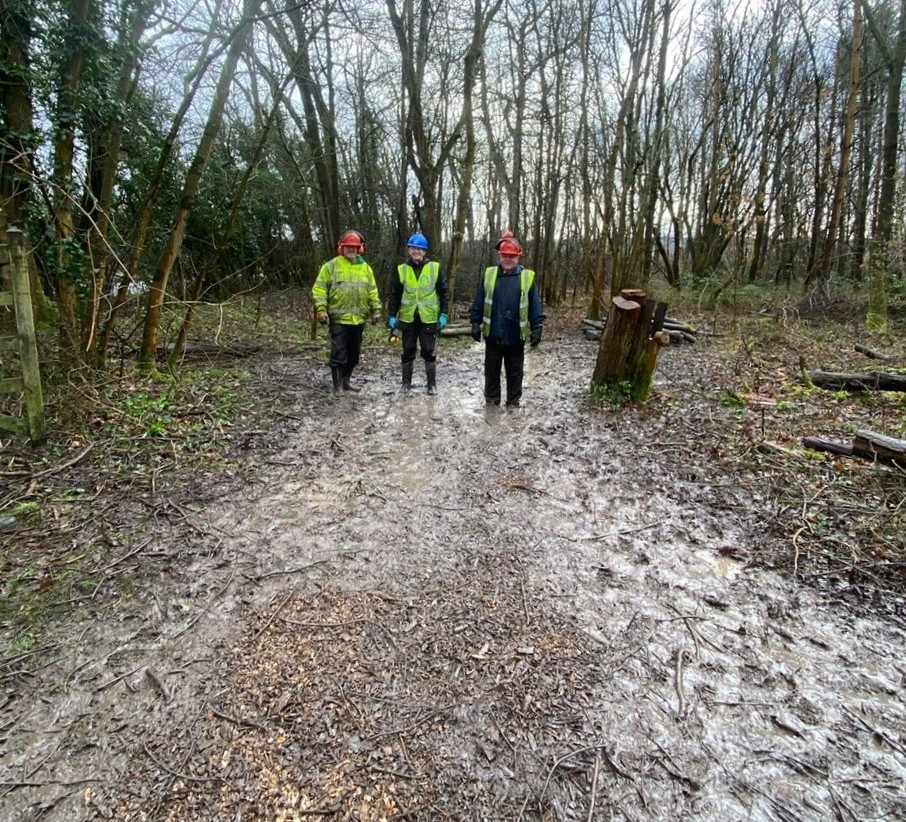
There was the usual winter flooding within the woods with some paths very muddy. A chipper was hired and created two large piles of chipping ready for the paths once the ground had dried.
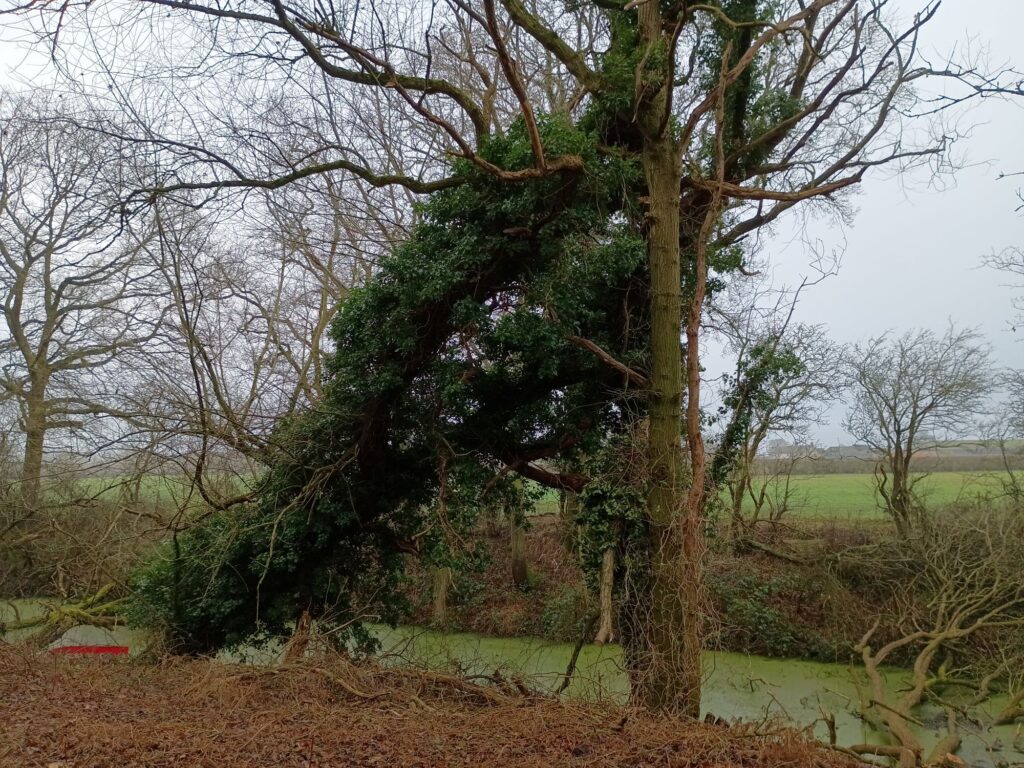
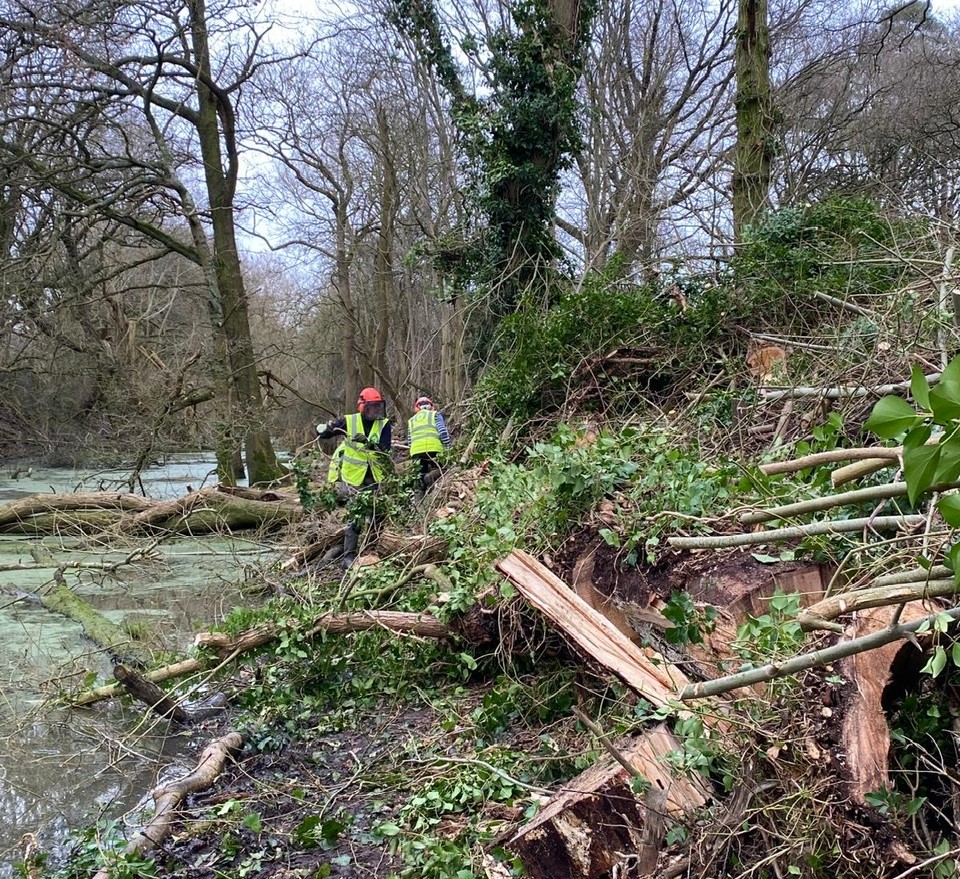
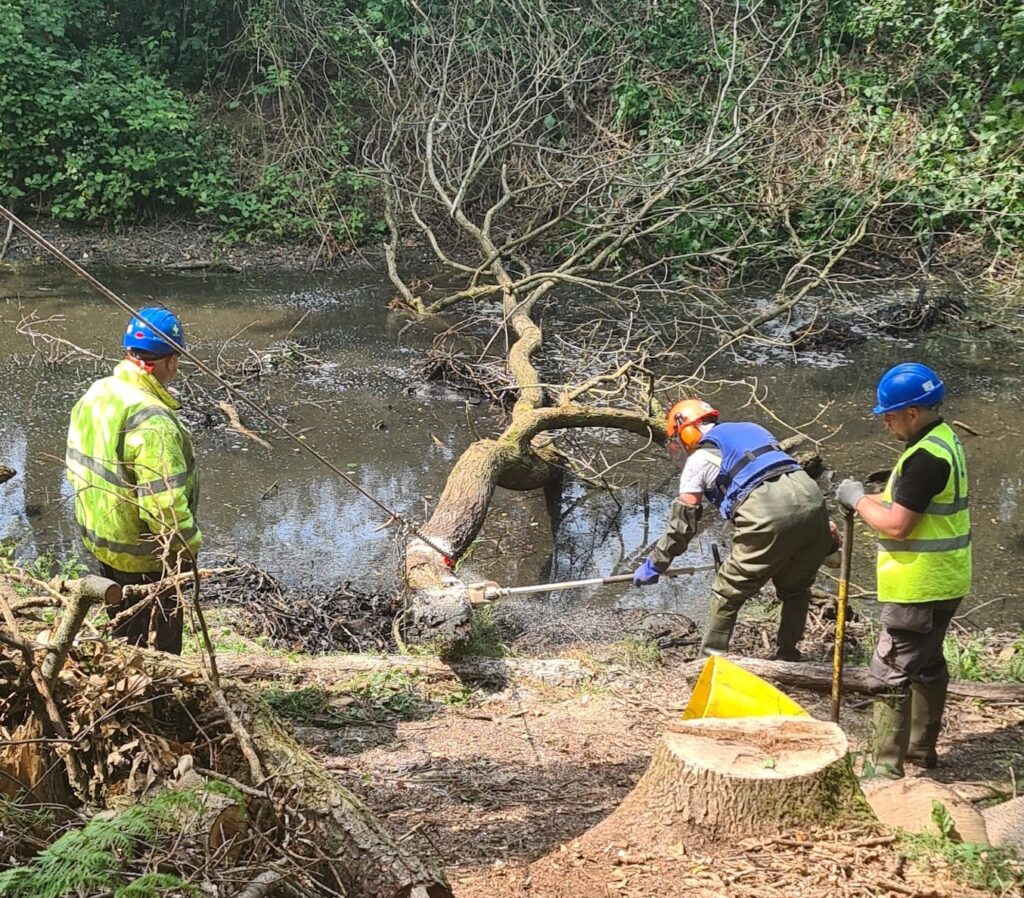
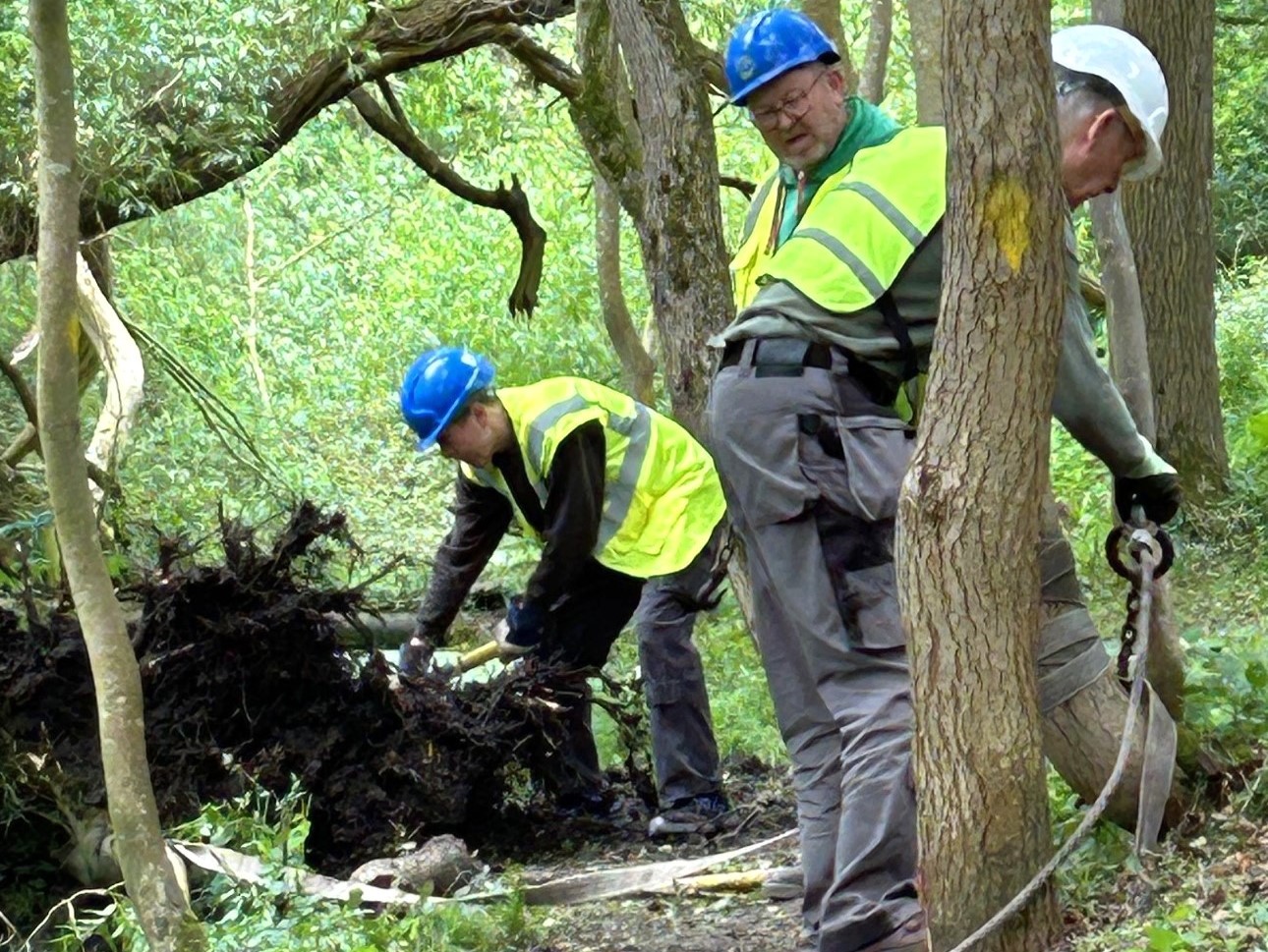
Hedge laying by Moor Mill Road continued in January. A toppled ivy-clad tree hung-up in another alongside the towpath caused concern. A tree surgeon was employed but felling proved to be quite a complex task. It then took two work days to clear the towpath of the debris.
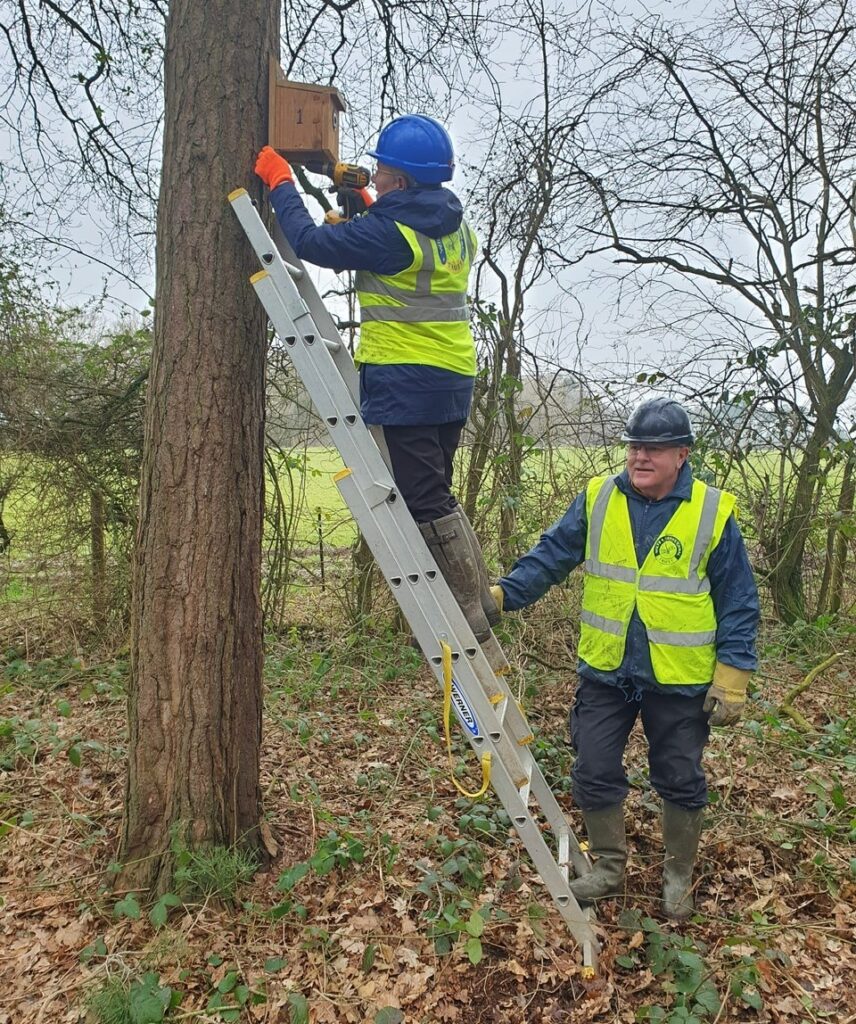
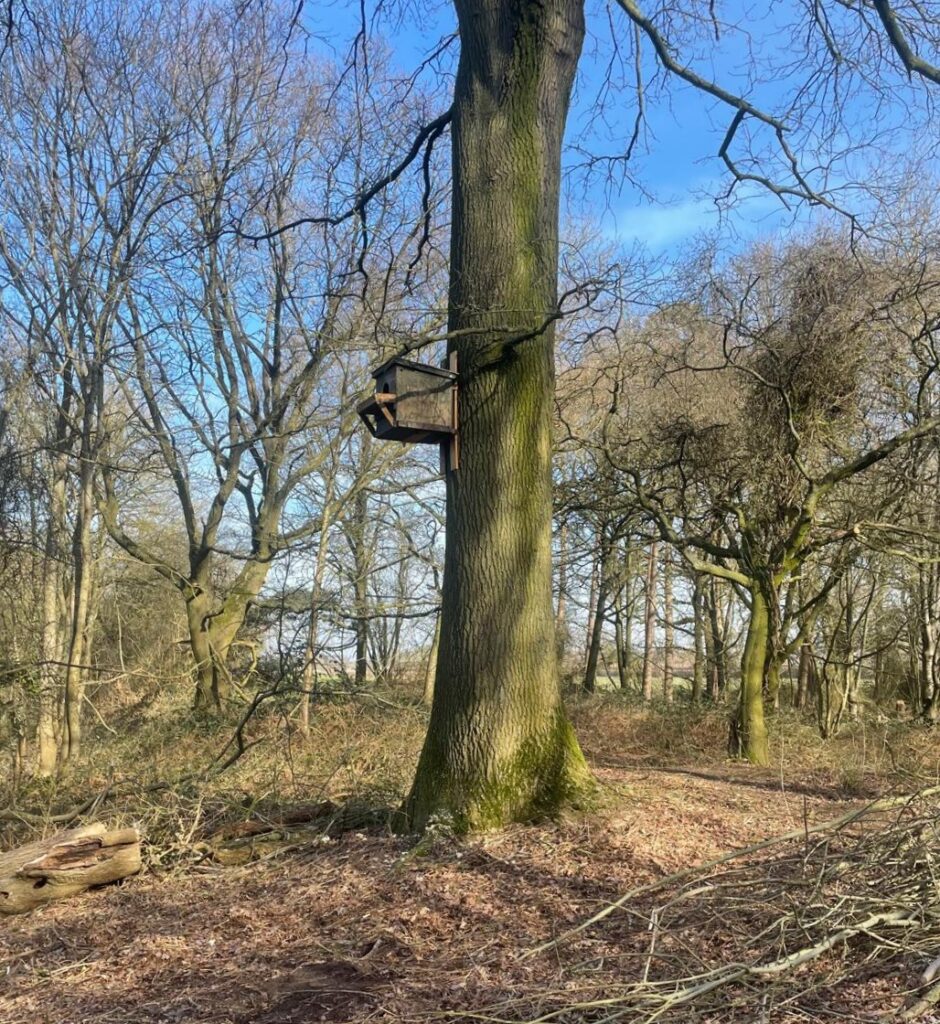
Stainsbridge House care home in Malmesbury made 5 bird nesting boxes for Coal Tits plus an owl box that were duly positioned around the wood.
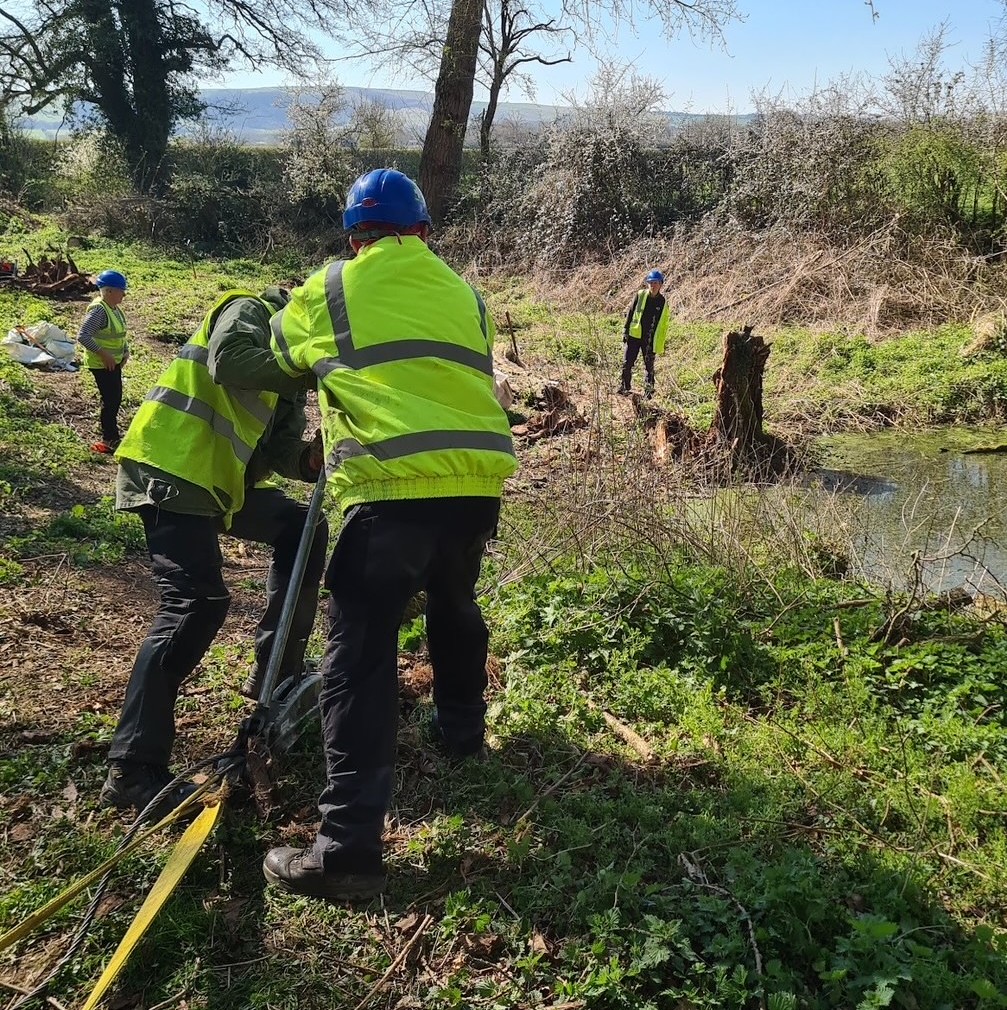
On the infill area, that is adjacent to the road bridge, all the snowdrops that could be found were replanted, after flowering, alongside a main path where they seem to thrive. Using winches, many logs were moved off the infill area then most of the stumps before they vanished beneath nettles.
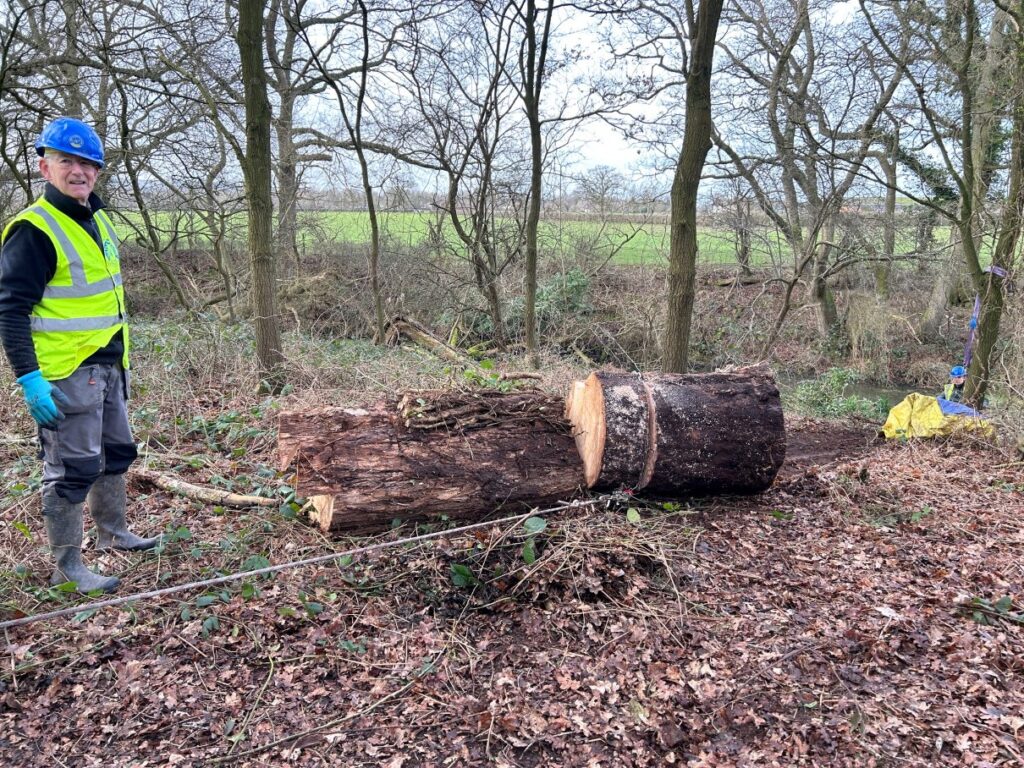
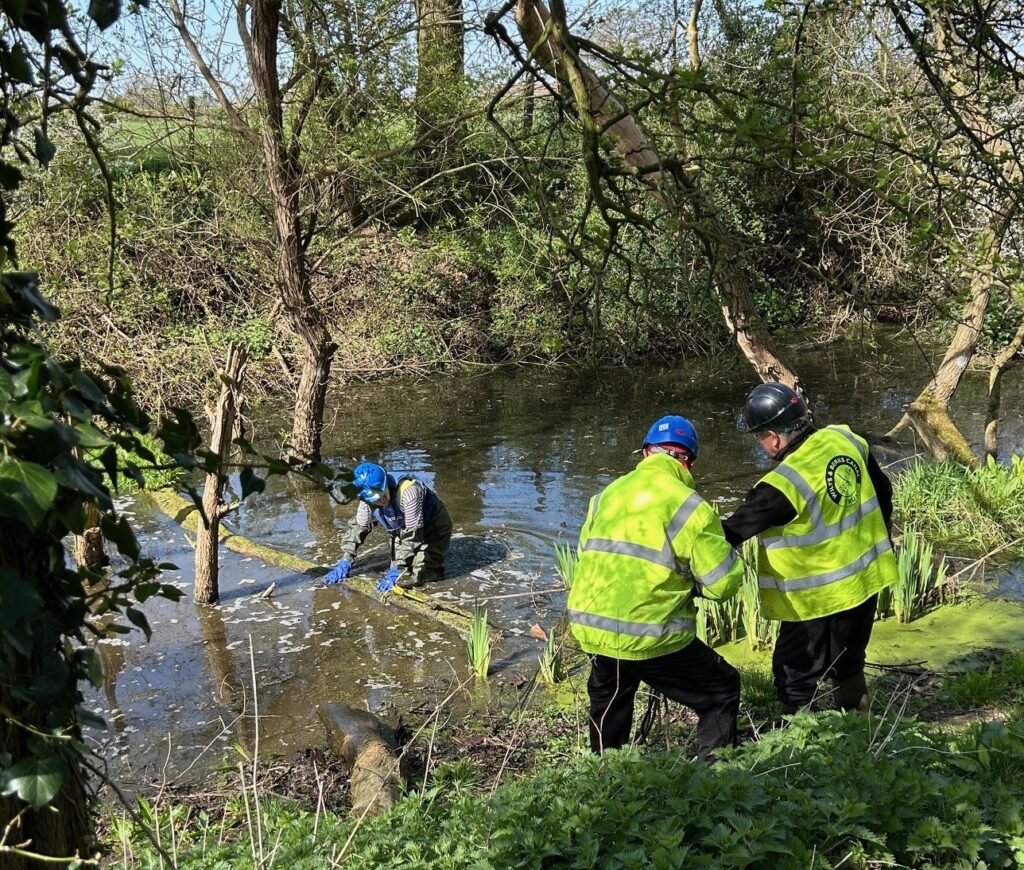
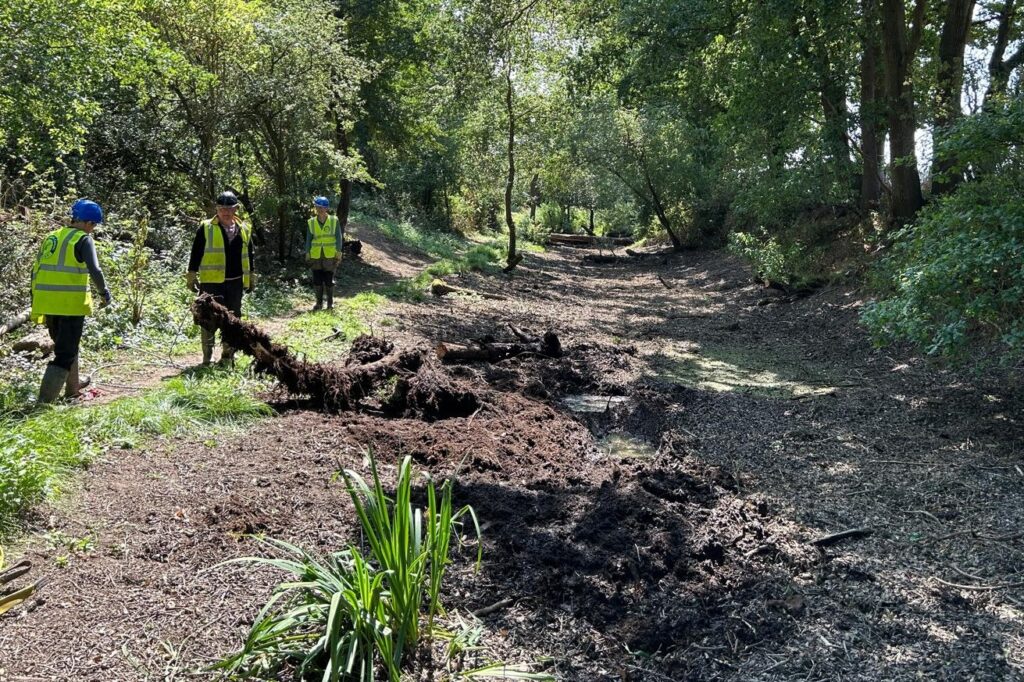
Working from the infill area and down the towpath, as many tree trunks as possible were pulled from the canal and up onto the high bank using winches. With a steadily dropping canal water level this work continued for several months, with the aim of clearing the towpath and canal edge. An increasing amount of debris was also removed from the bed of the canal.
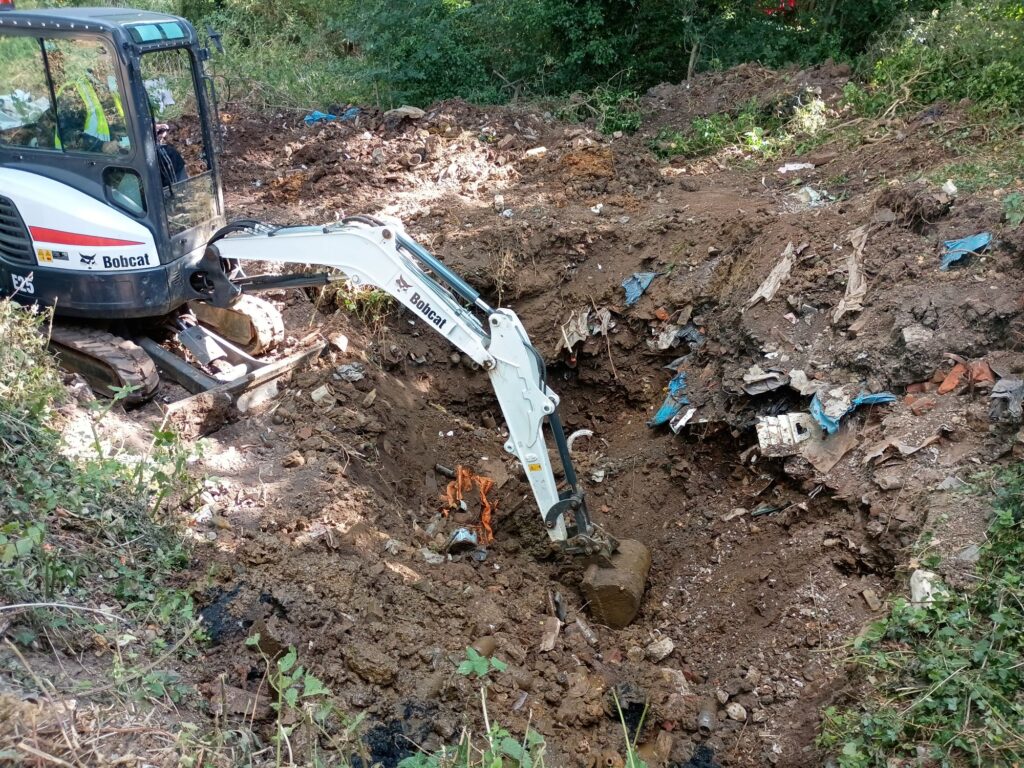
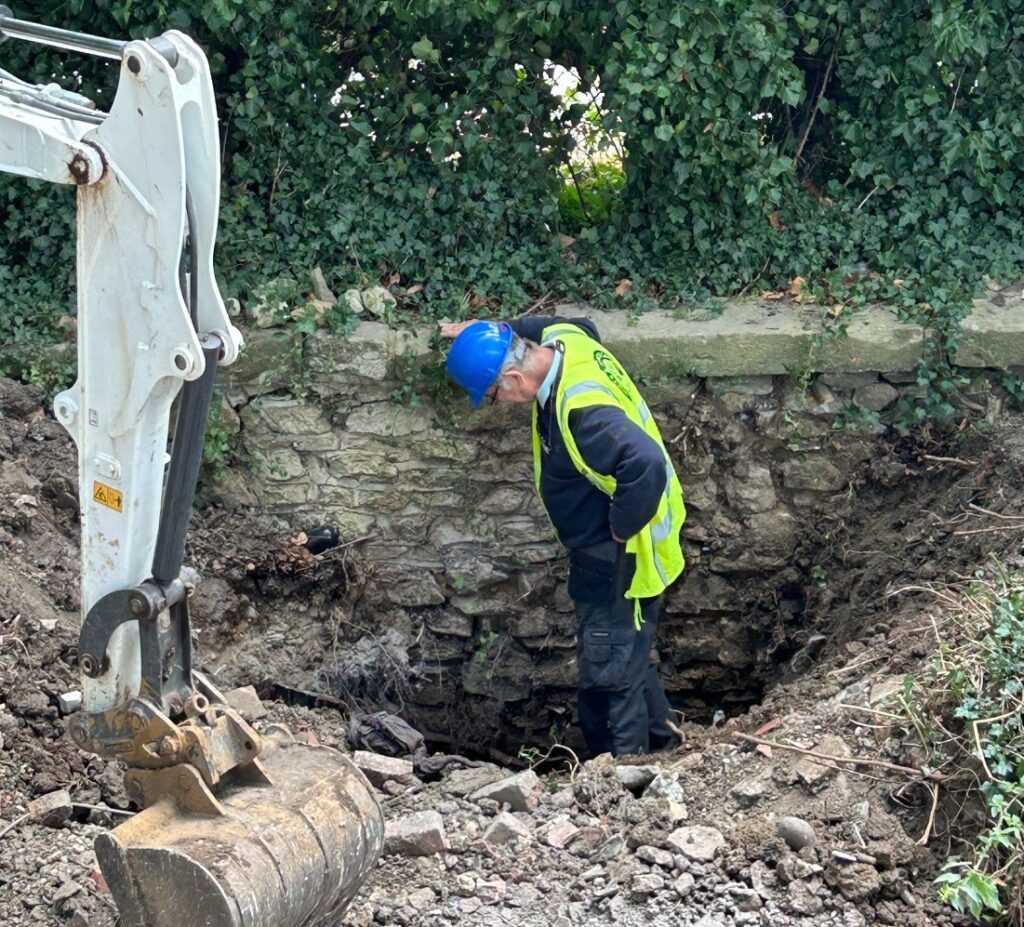
In July, two test pits were dug in the infill area. The first pit was dug into the base of the existing “bottle pit”. It yielded a large quantity of rubbish (metal, glass, pottery, masonry, plastic) and very little top soil. The silt and Kimmeridge Clay layers of the canal base were found almost 4m below the current surface and the bottom of the hole rapidly filled with water. Unfortunately, despite extending the pit to the side, there was no sign of the towpath or the expected bridge training walls. A second pit, alongside what we assume was the bridge wall, was increased by about 1m to see if any sign of a bridge arch could be located. Unfortunately, once again, nothing was found.
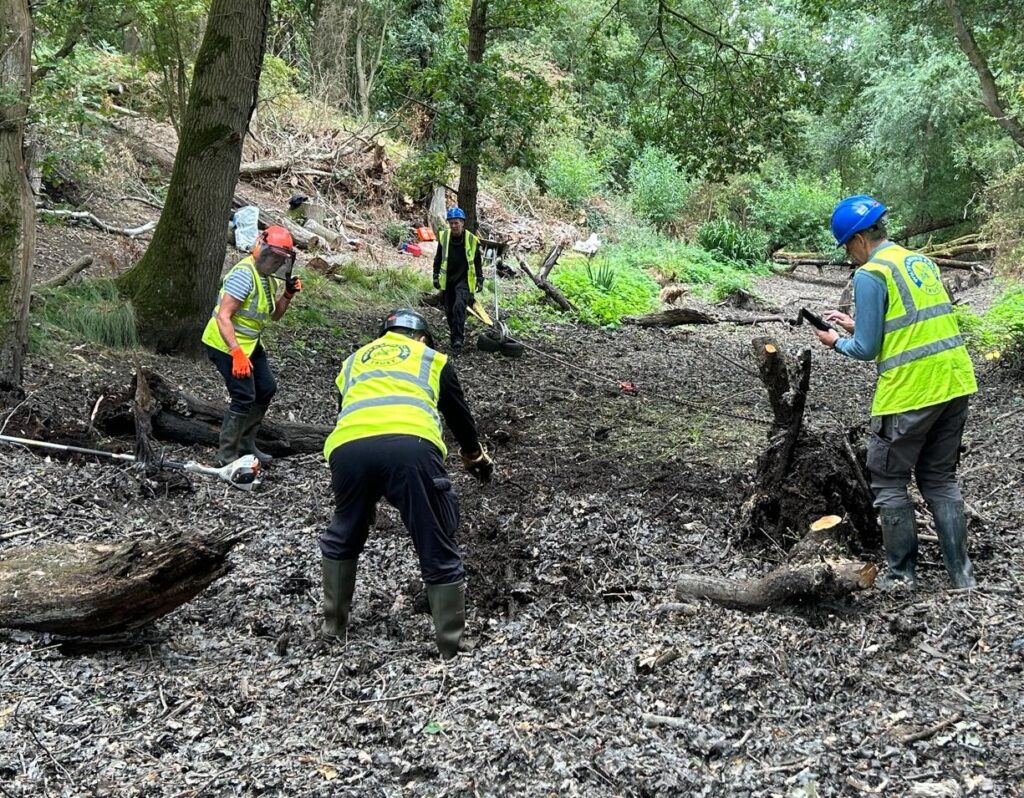
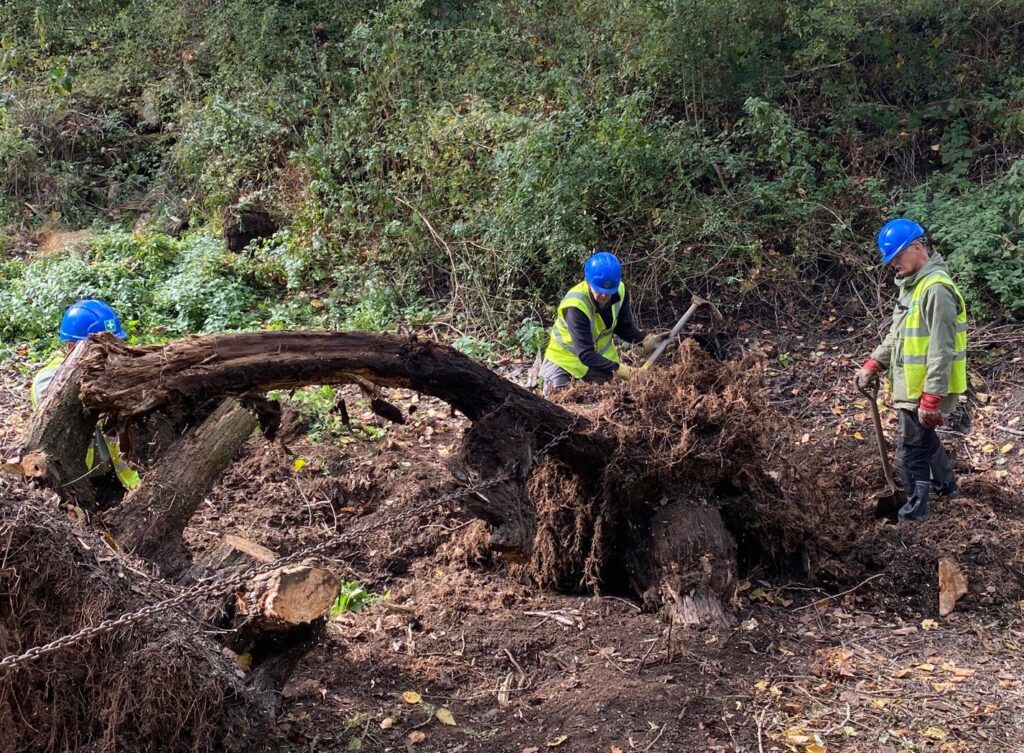
Later in the summer, with the canal dry, the focus changed to winching tree stumps from the bed of the canal, hard and time consuming work. About a dozen were removed, leaving almost 50m of the canal clear.
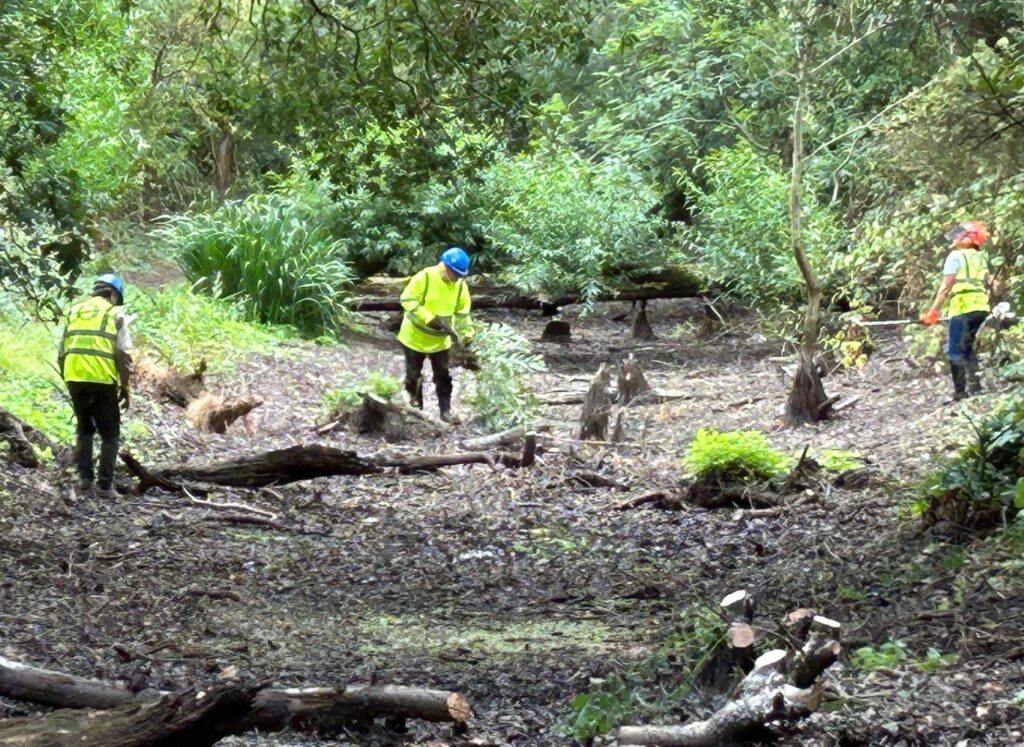
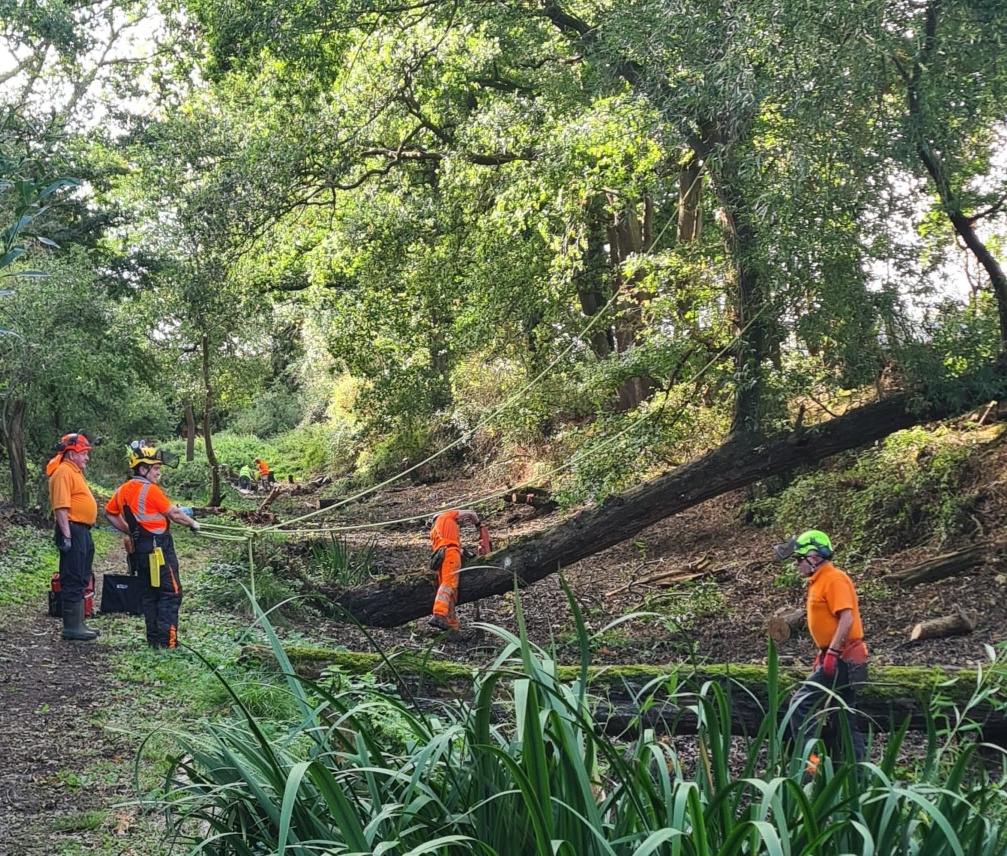
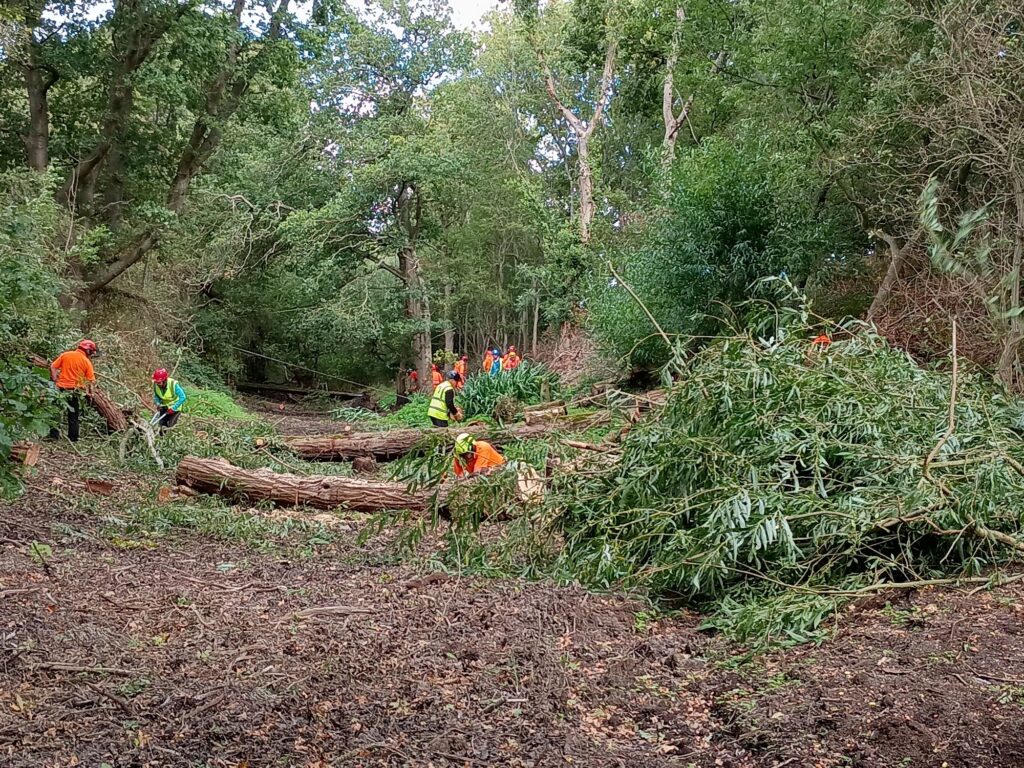
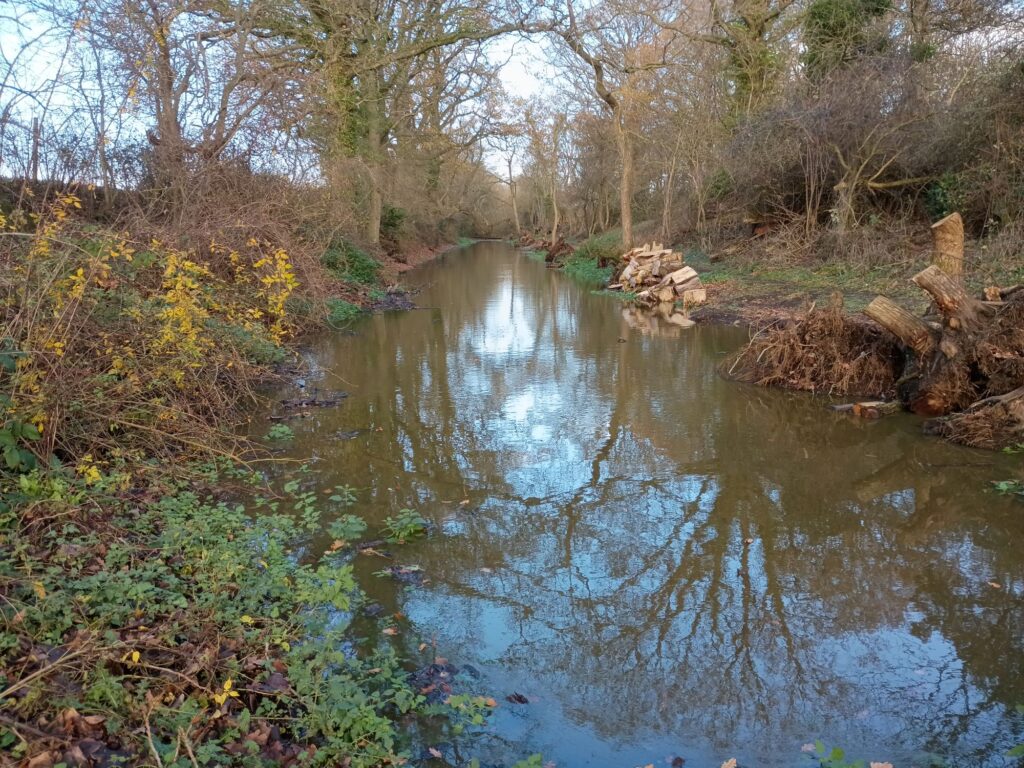
The WRG Forestry Team returned to the wood in September. With a dry channel, about 20 trees obstructing the canal were cut, finally leaving the canal clear from end to end.
After recovering more logs and brash from beside the towpath, the local team, continued to winch out the many stumps and logs still embedded in the canal.
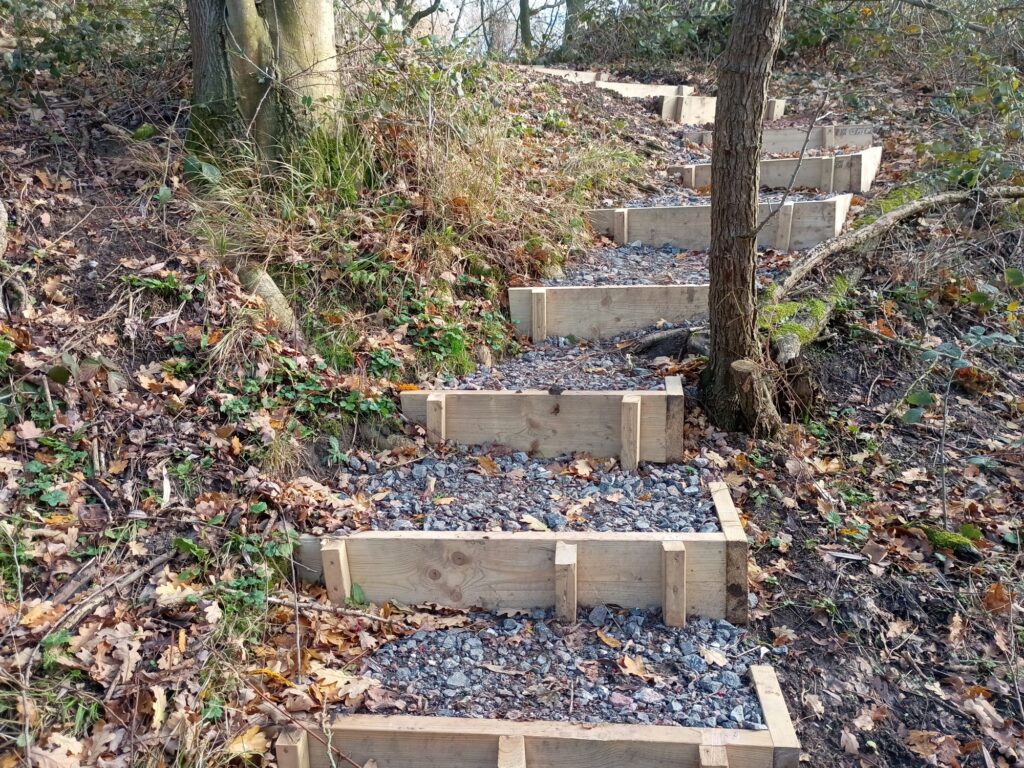
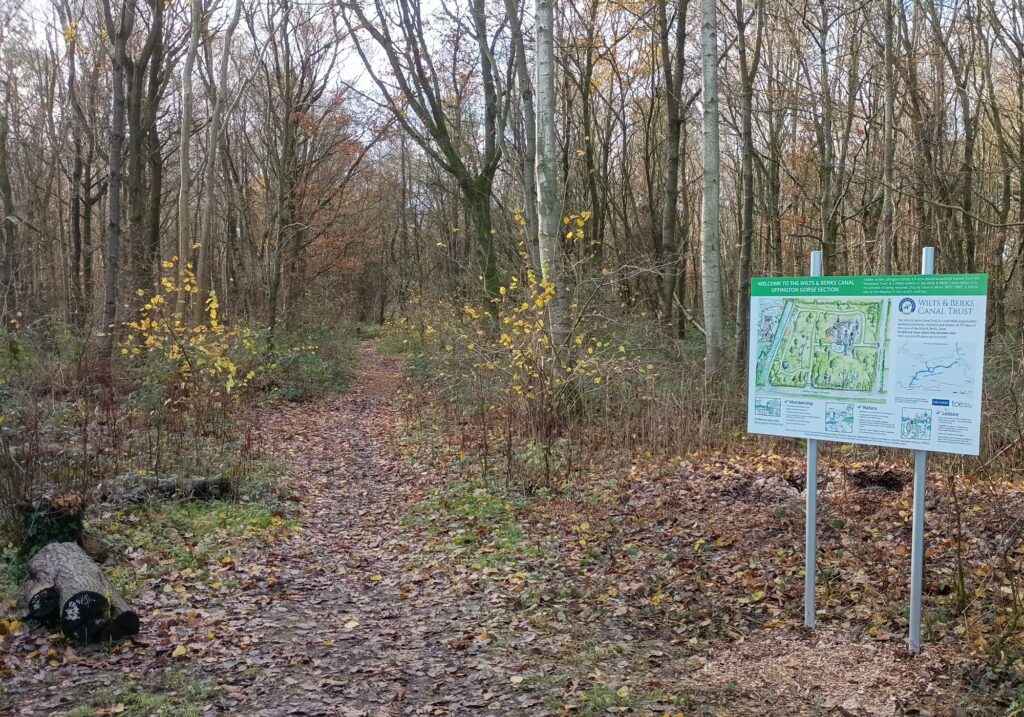
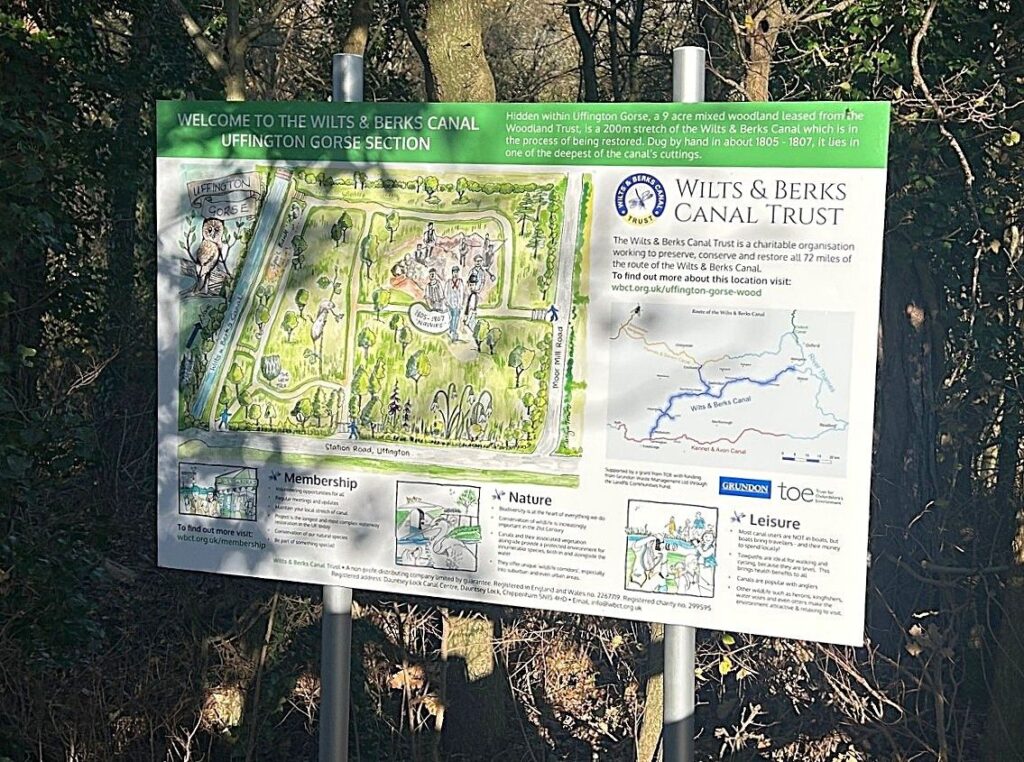
With the towpath now clear, towards year end, steps were built into the slippery bank at the north end of the canal to improve the public access; the materials being funded by a grant from the Trust for Oxfordshire’s Environment (TOE). Additionally, the TOE grant covered the cost of producing permanent maps and information signs at the wood’s entrances.
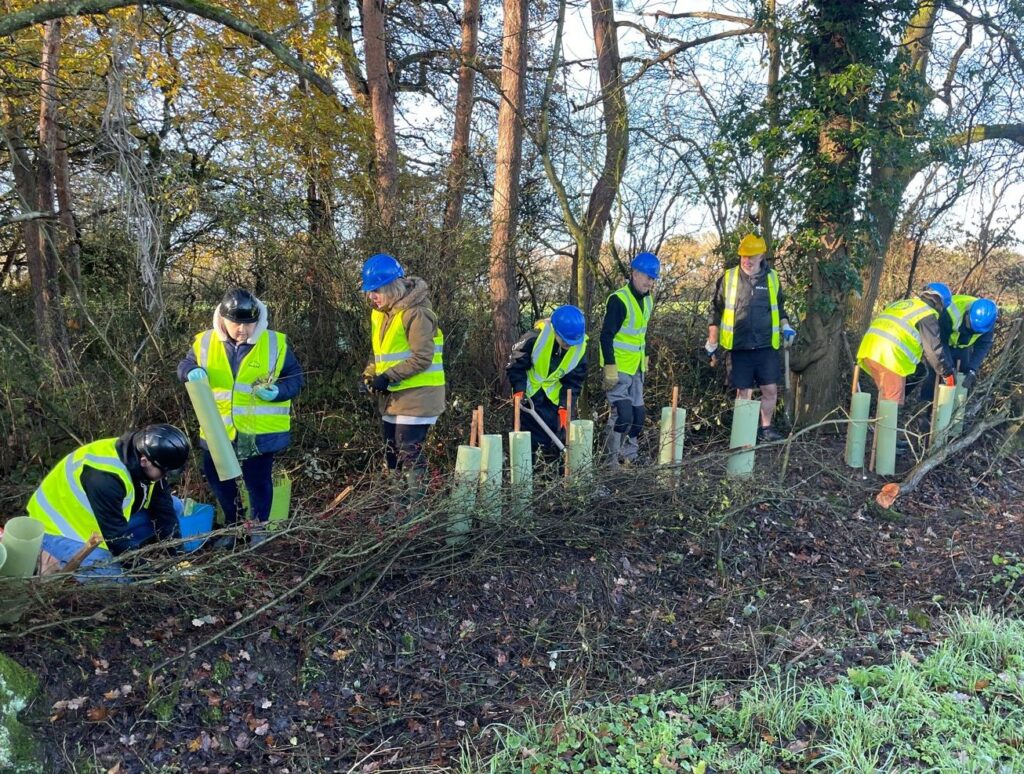
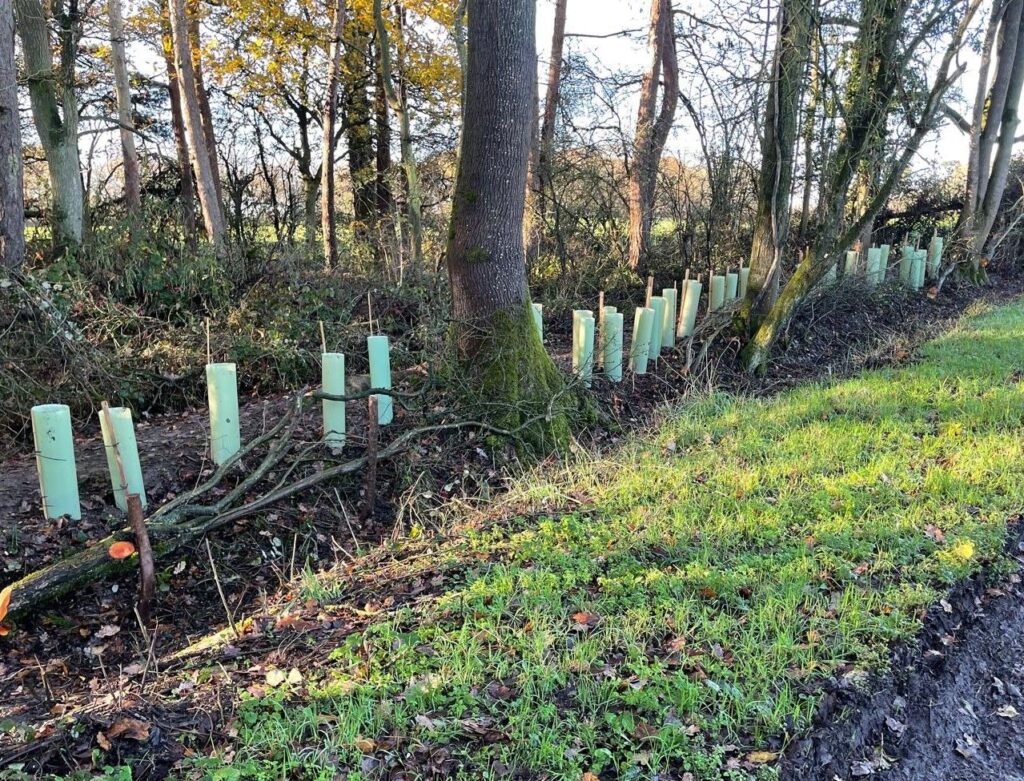
In December, laying the hedgerow on Moor Mill Road recommenced and 90 new saplings were planted by corporate volunteers from the MAN Group to fill gaps.
Site Activity During 2024
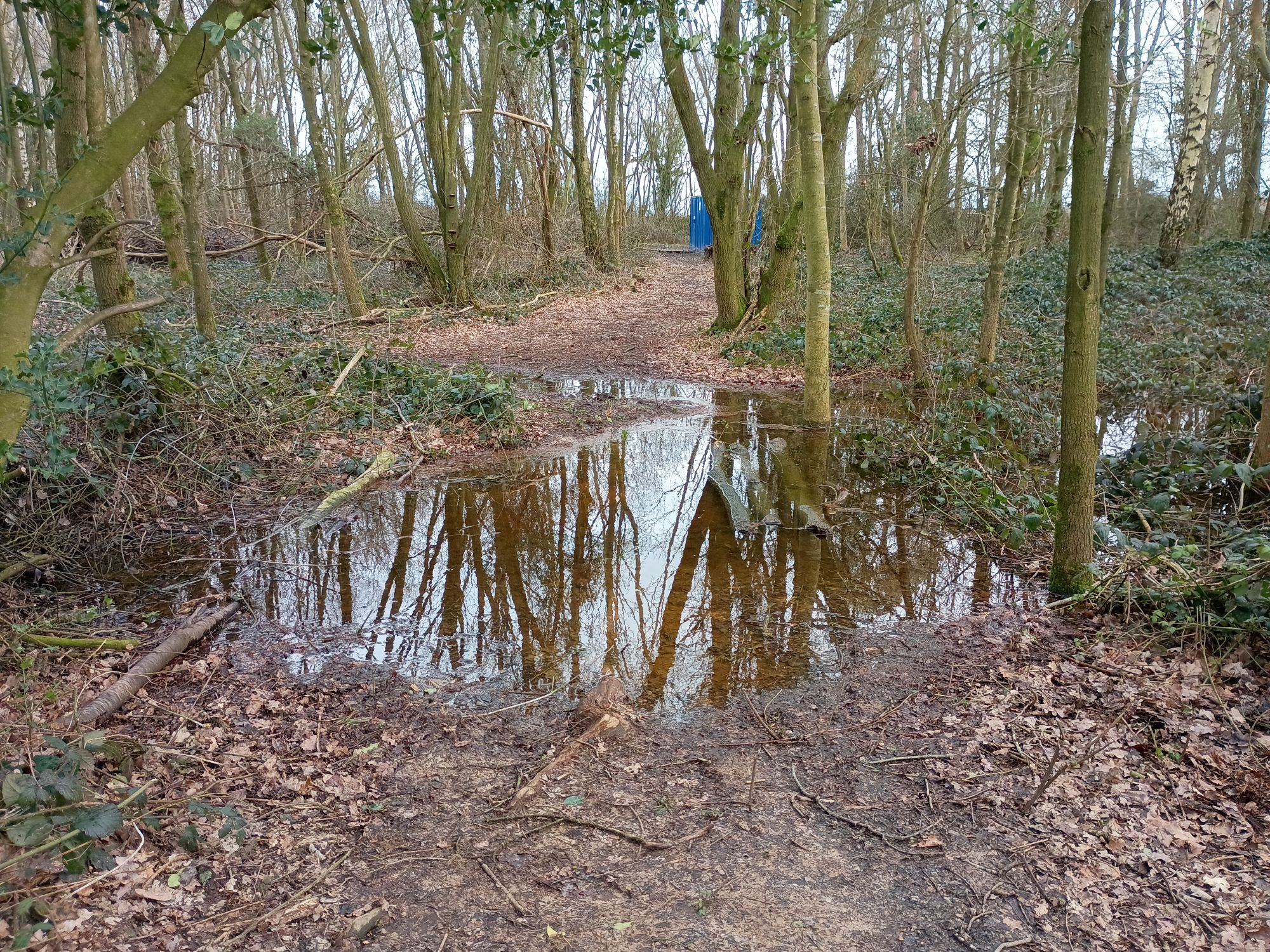
In the spring, much of the southern area of the wood became waterlogged, with the main paths under water, so our volunteers cleared and extended the drainage channels.
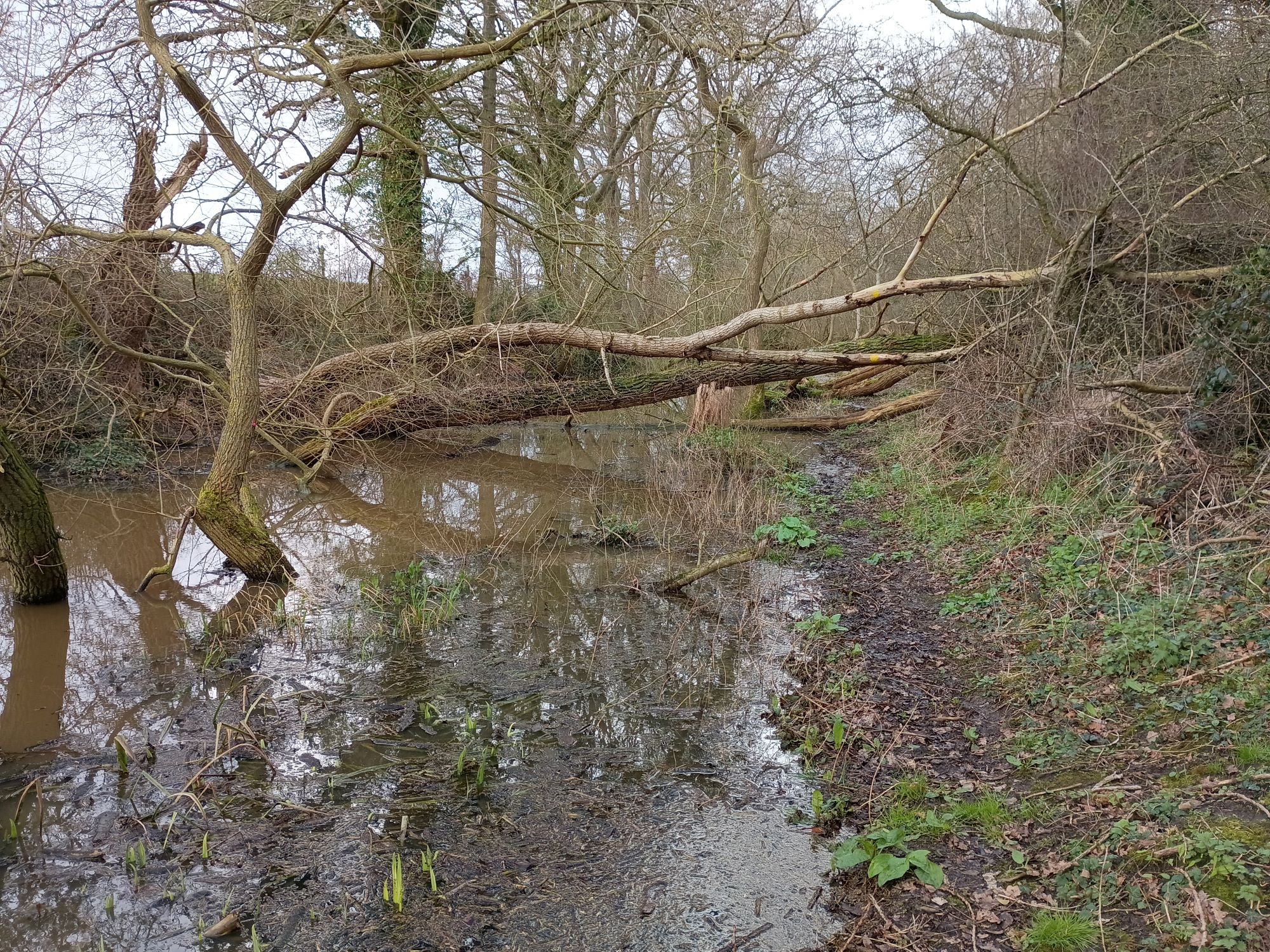
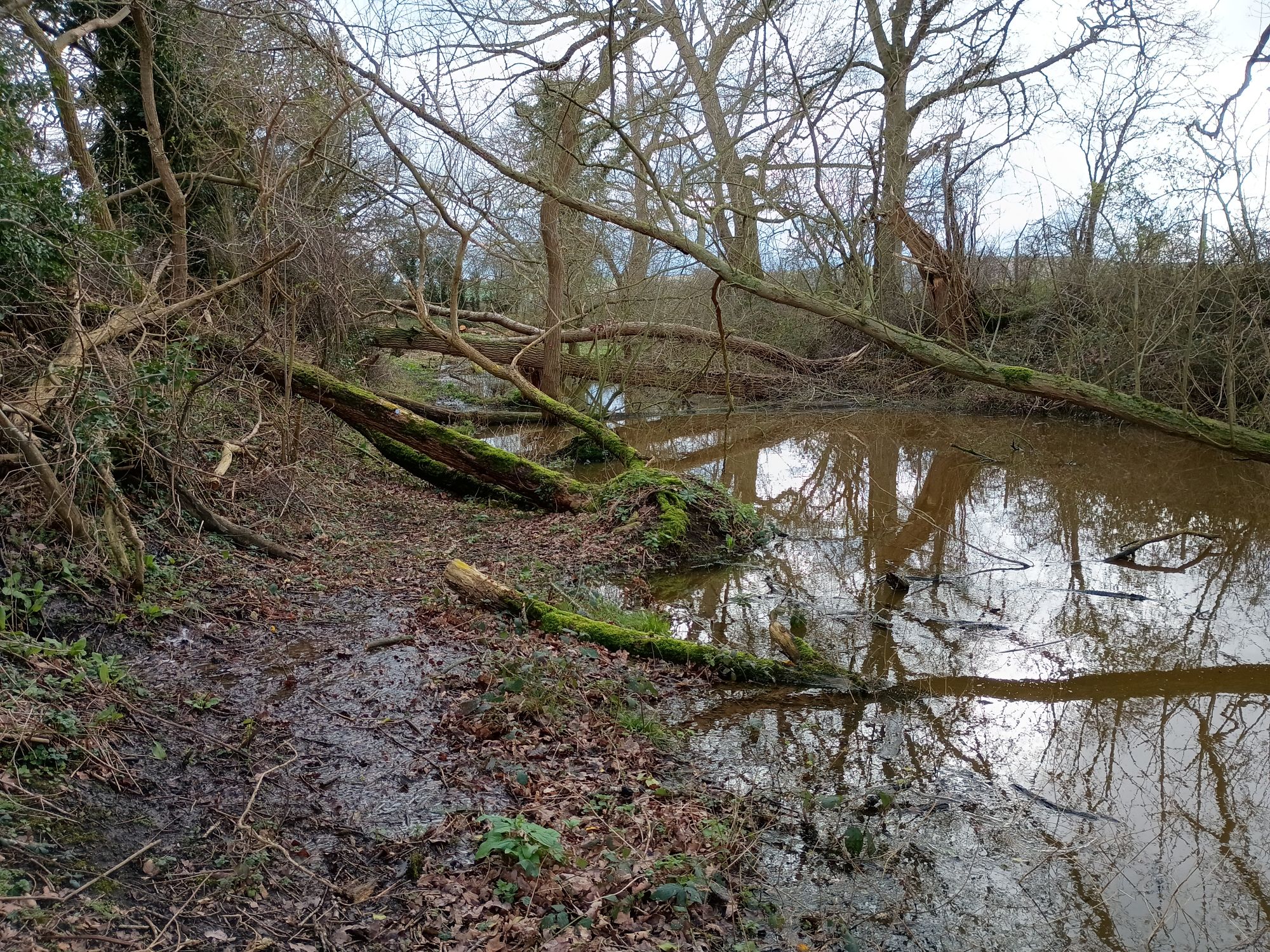
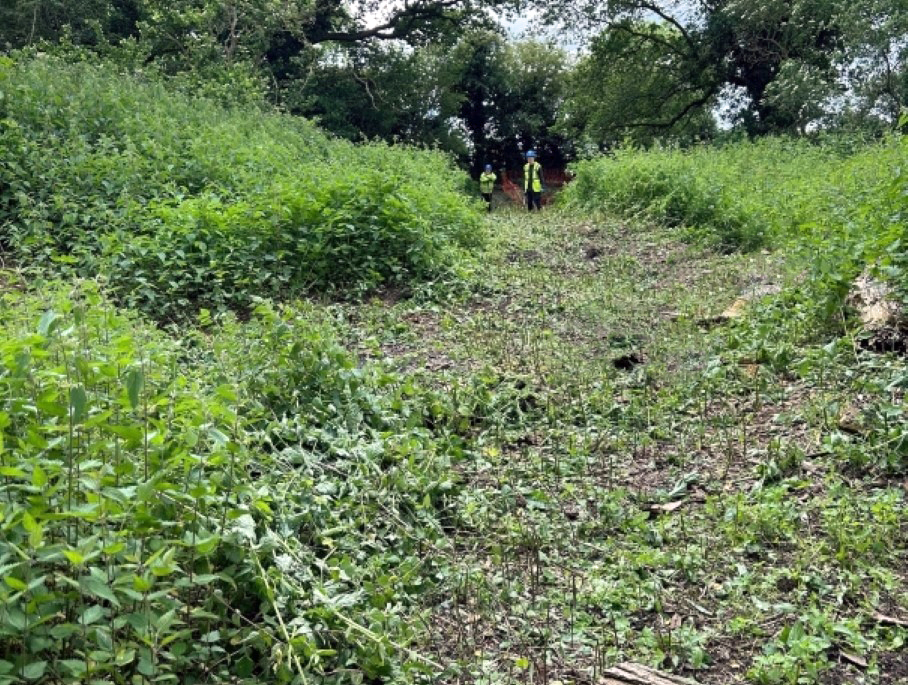
Despite the rain, the tip area towards Station Road and the towpath, were finally cleared of fallen trees. At last, it was possible to follow the length of the towpath without having to duck under or climb over branches.
During summer, work continued to improve the drainage in the southern corner of the site. Also much time was spent on removing the tree stumps that obstructed the towpath, as well as keeping the paths within the wood and access across the tip area clear.
The 10 year Management Plan for the wood, commissioned last year, was received and plans then made to implement it’s recommendations.
We were awarded a grant from the Trust for Oxfordshire’s Environment (TOE) to finally clear the fallen trees from the canal area, also to improve access to the towpath and install information boards.
Later in the year, the towpath was cleared of the further fallen trees, nettles and brambles.
The Waterway Recovery Group (WRG) forestry team came at the end of September to fell the unsafe trees (many being dead ash) as listed in the Management Plan. However, recent rains had raised the water level in the canal preventing the removal of the large trees that had fallen across the canal itself.
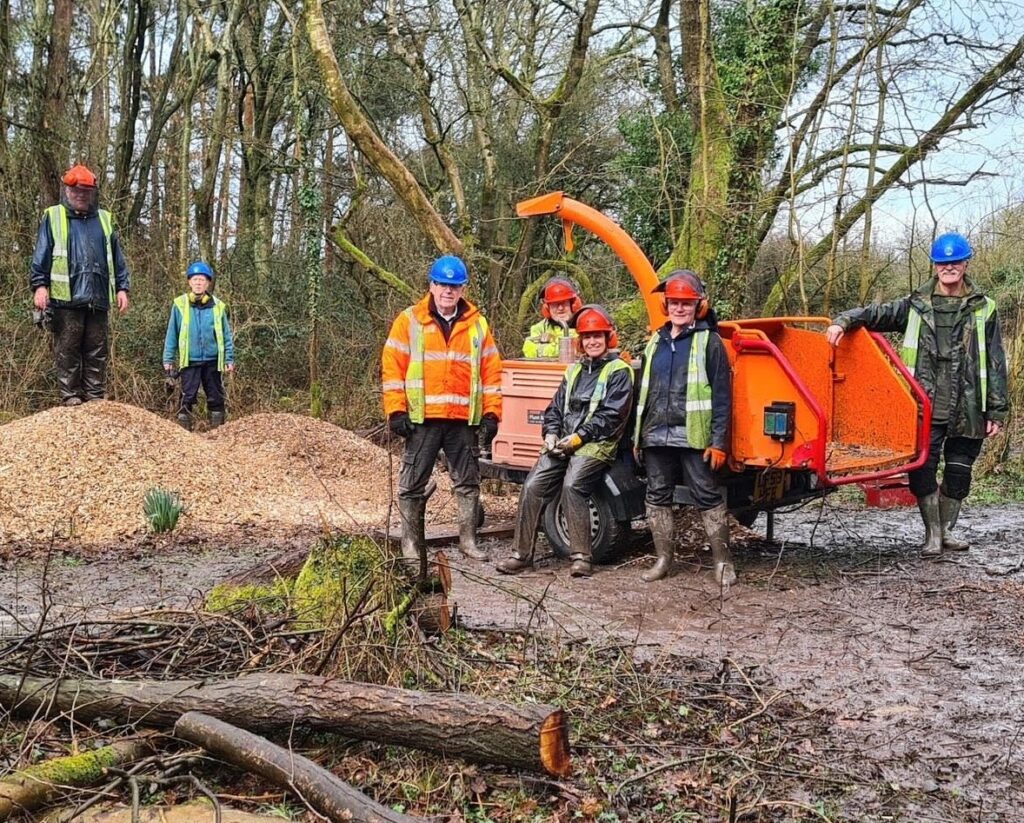
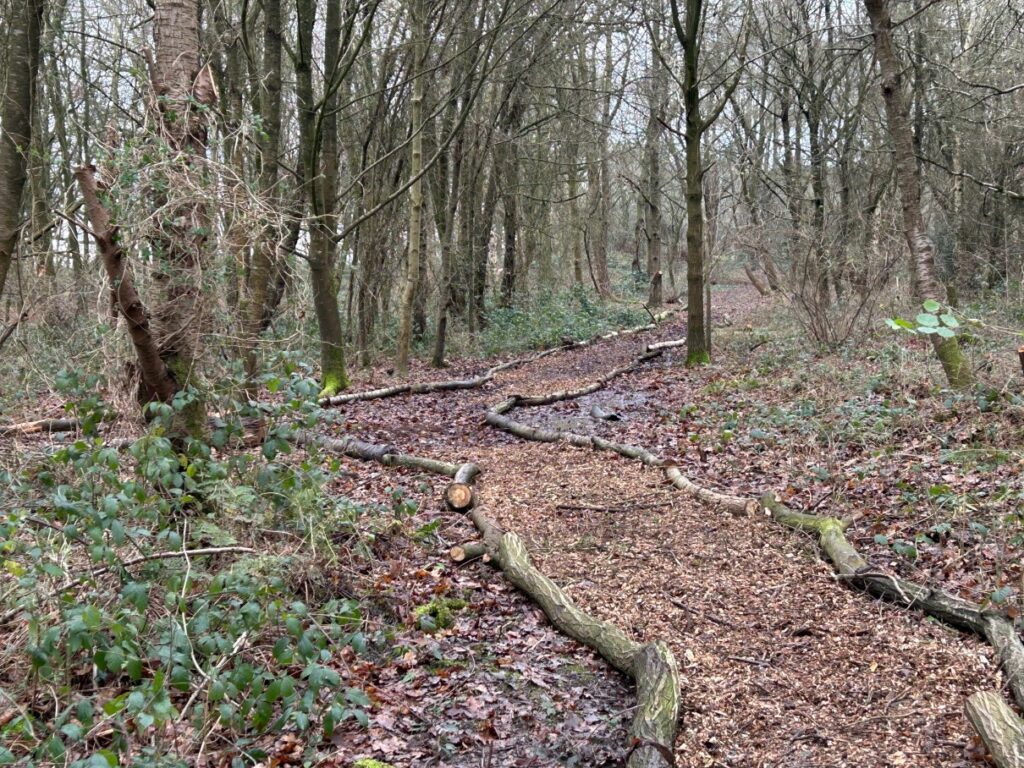
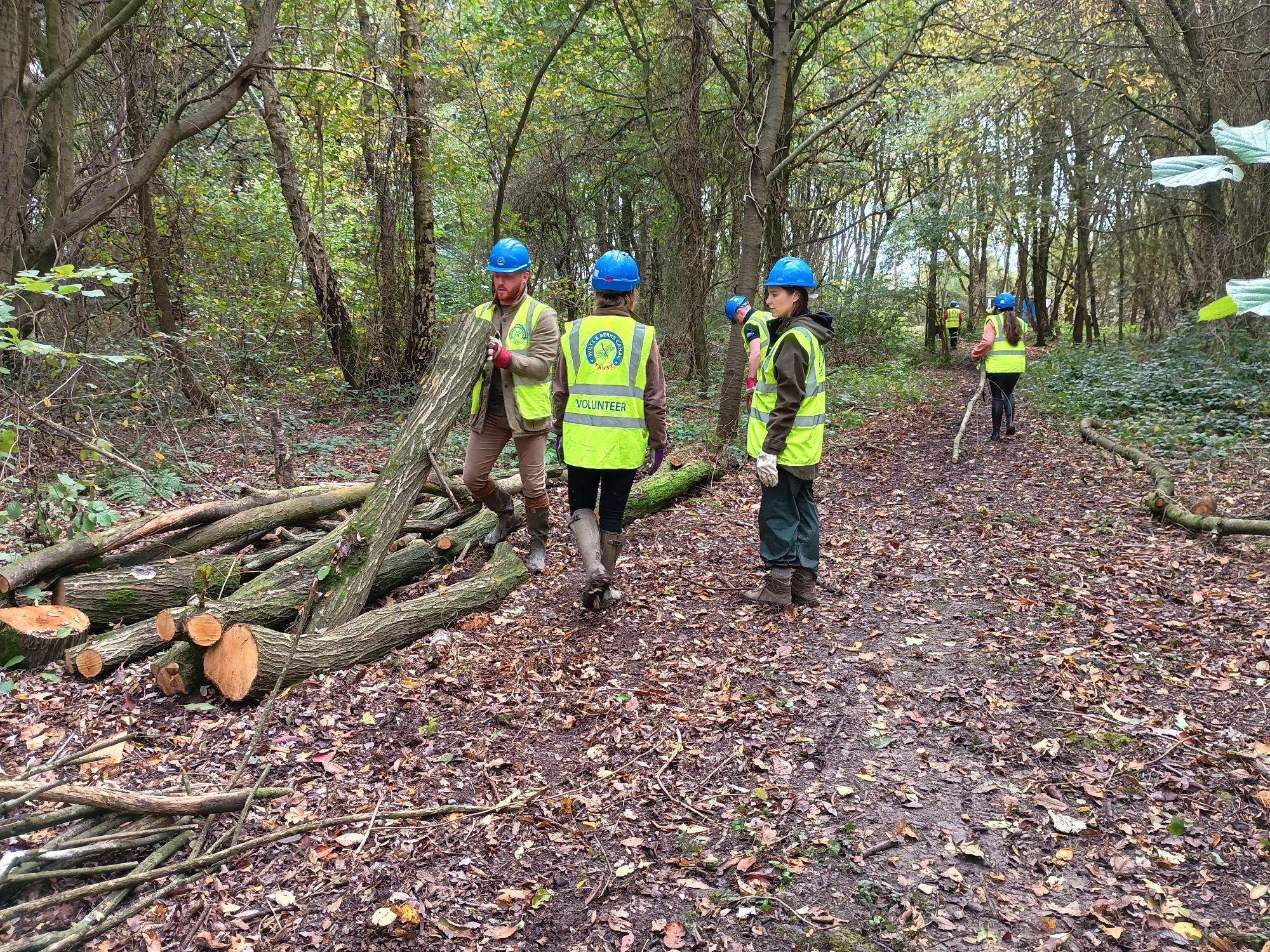
The wood hosted it’s first corporate volunteer team (from land agents Strutt & Parker) who moved many of the branches and logs, cut by WRG, to a stacking area by Station Road. The very big piles of cut branches were chopped into chippings that were then used to surface the muddiest paths.
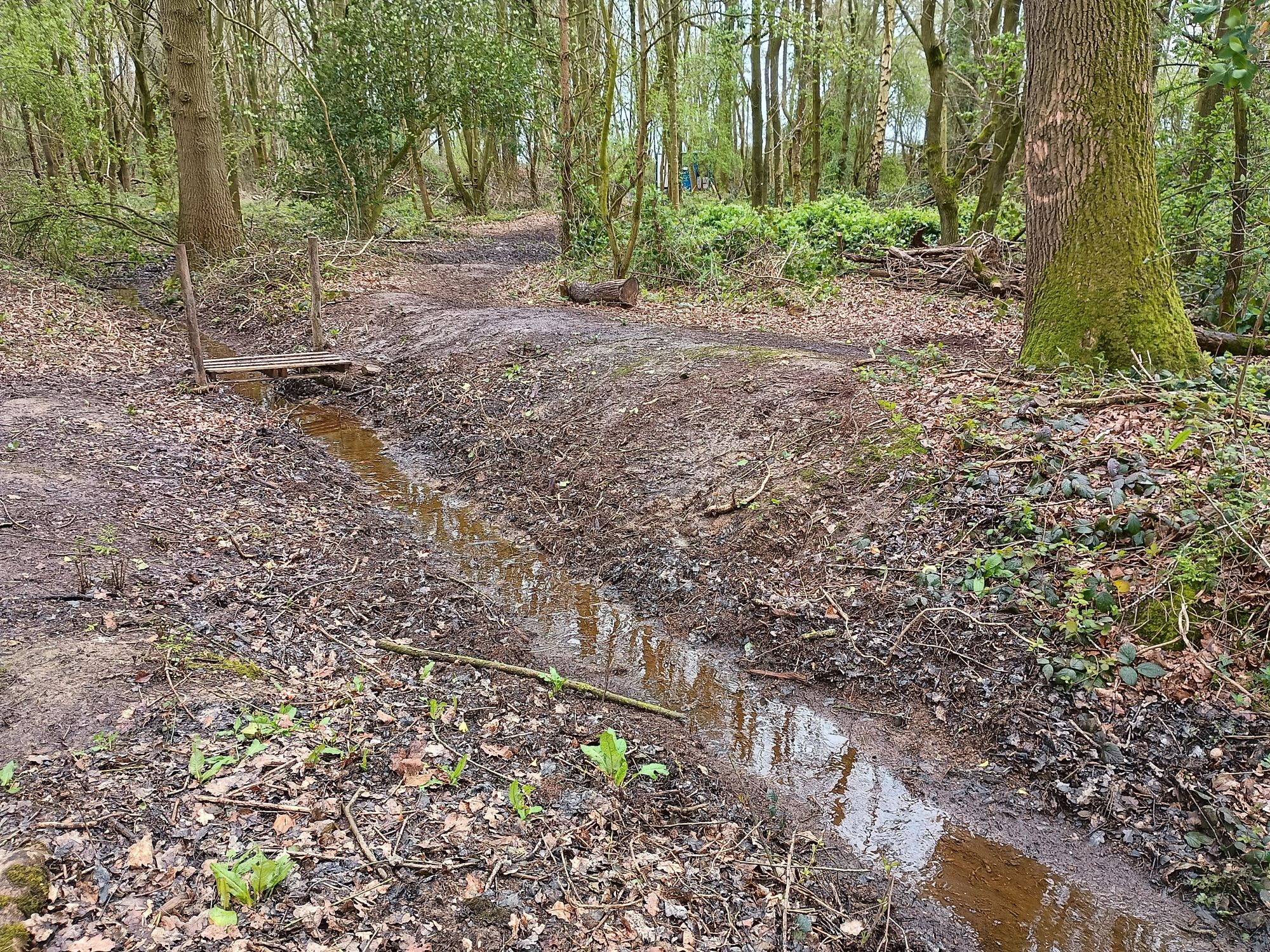
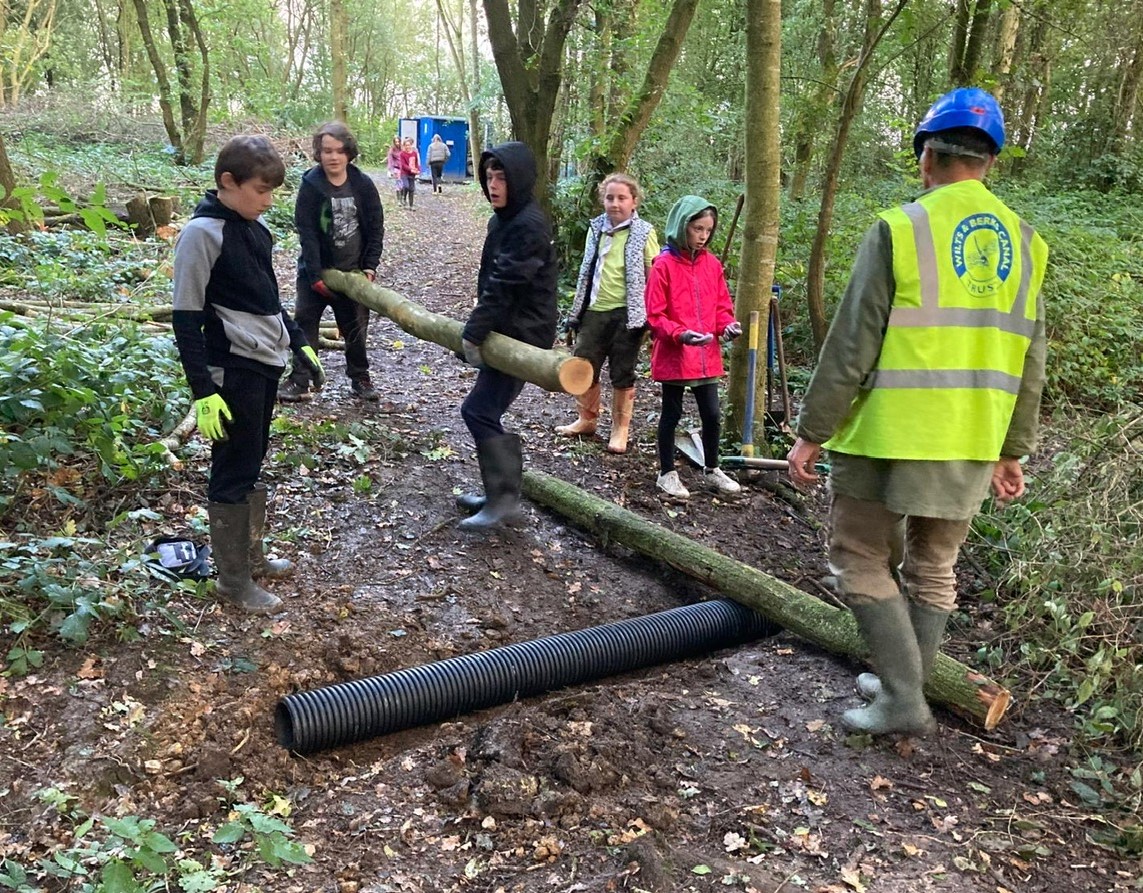
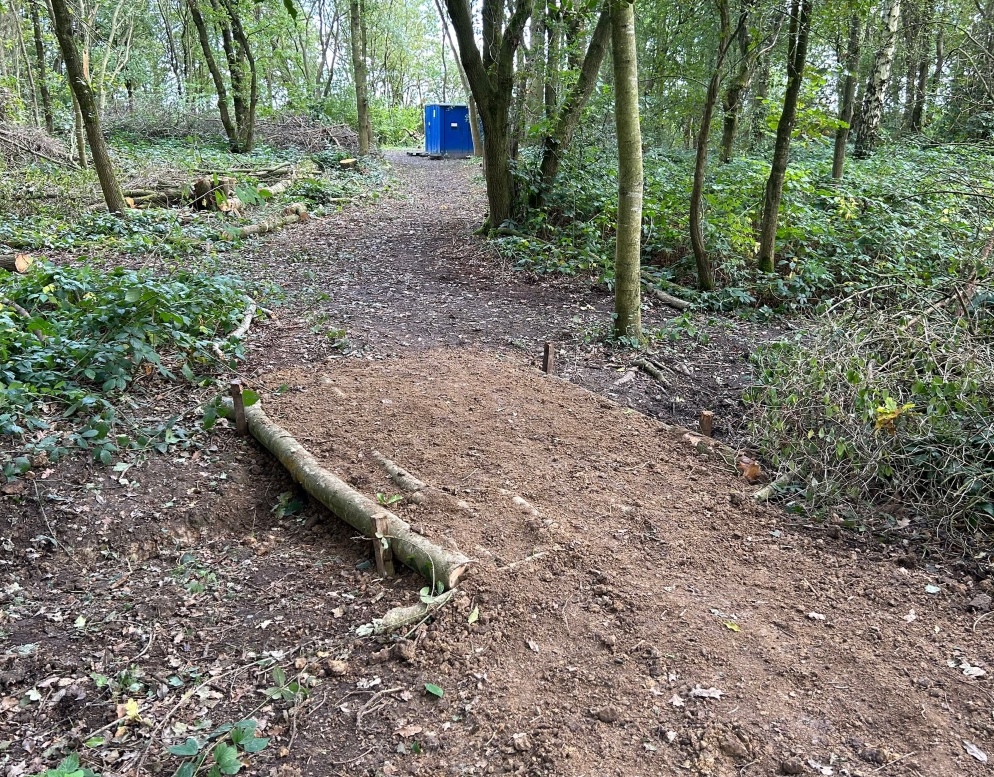
Groups of scouts joined our volunteers to build bridges across drainage channels in the lower part of the wood that was liable to flooding.
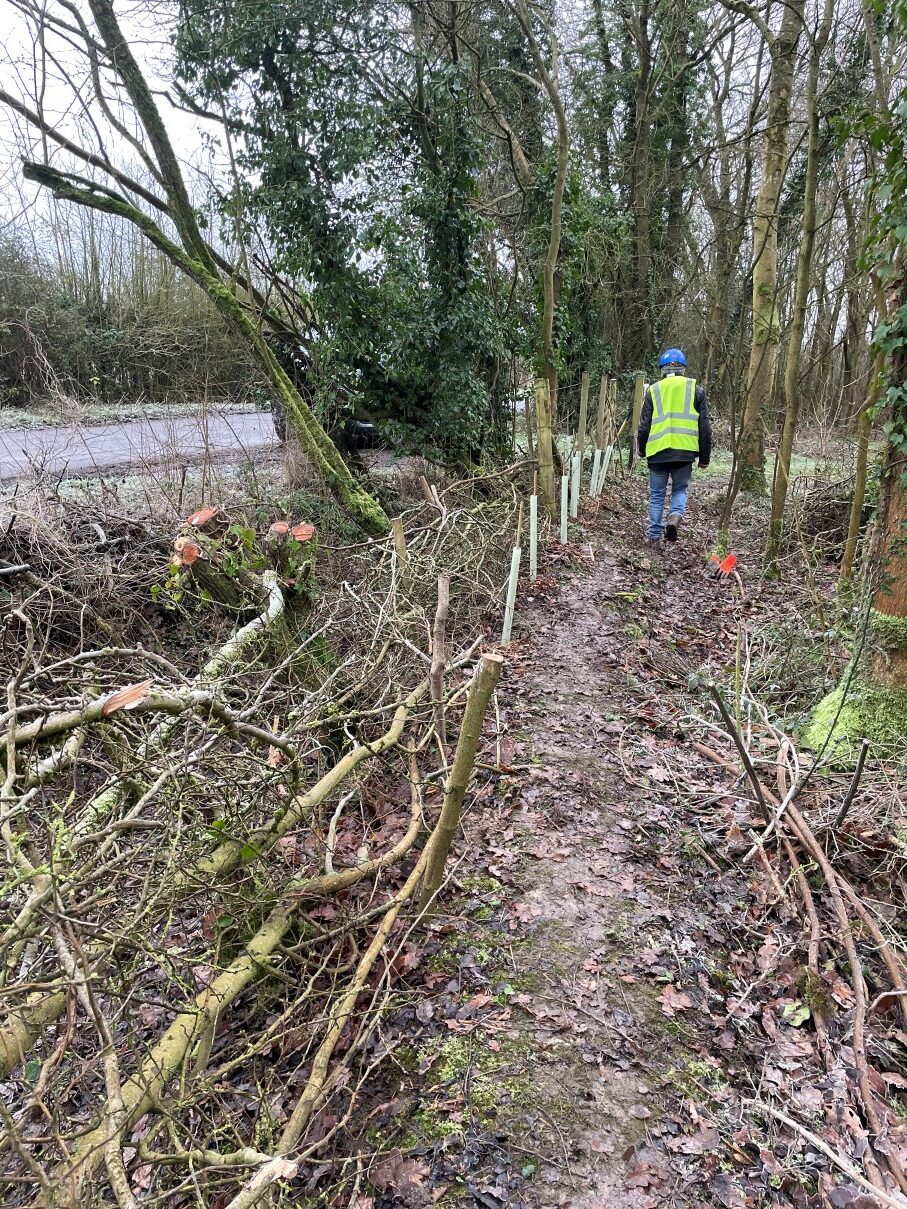
Finally, a length of the hedge along the Moor Mill Road boundary was laid in the traditional way, with our local volunteers learning the skill. Gaps in the hedge were filled with 50 saplings from the The Conservation Volunteers (TCV) “I Dig Trees” scheme.
Site Activity during 2023
A strategy for the improvement of the whole site was developed; in outline:-
- Carrying out arboricultural and ecological surveys to establish a short and long-term Woodland Management Plan.
- Improving the access to and within the wood
- Removing discarded car tyres and metal
- Removing fallen trees blocking the canal & towpath
- Reinstating the towpath along the canal
- Removal of the fly-tipping filling the canal by Station Road
- Providing benches
- Installing signage
- and clearing the canal itself – a long-term objective, as significant funding will be necessary
Our plans, as outlined above, were submitted to and approved by The Woodland Trust.
Our first task was to engage a tree surgeon to survey the trees and make safe any unstable trees and broken branches. This was completed in late February. Additionally, our volunteers cut back some of hedges that border the wood, as these had encroached on the verges and roads, especially at the junction of Station Road and Moor Mill Road. During December, following grant funding from Uffington Parish Council, a contractor carried out a full hedge cut. The Parish Council kindly also funded the recycling of the discarded motor tyres which we collected in the spring.
During April, temporary signage was installed at the three entrances, informing visitors about WBCT’s aquisition of the site and of our improvement plans. Also in April, our volunteers began regular Wednesday work-parties and the path alongside the canal (the original towpath) was cleared of bramble and scrub; although many fallen large trees still obstruct the path in places. This task had to be repeated during the summer as growth of nettles was prolific.
Having made access along the old towpath, it was possible to make an inventory of the trees that obstructed the path and canal. As some were subject to the Tree Preservation Order (even though they were fallen and broken) permission for removal was gained from the District Council and because of the size of the trees, a Felling Licence had to be granted by the Forestry Commission.


Off-site, our project manager gained a grant so that ecologists could be sought and contracted to create the Woodland Management Plan.
Much planning was done to itemise and cost all the tasks involved in the overall strategy.
Having collected the larger items of rubbish from the site, our volunteers started to excavate the many tons of material dumped into the canal by Station Road. With advice from South Oxfordshire Archaeology Group, test pits were dug adjacent to the road in order to find what might remain of the original bridge that carried the road over the canal. Although some stonework was exposed, further, deeper digging will require the use of an excavator and the removal of the large fallen trees.
Towards the end of the year, the volunteer work-parties cleared an area by the the main Station Road entrance as a work site for our mobile welfare unit, they also created a new path to the canal, so that the trees felled by the canal may be moved to the gate.


